Hedge funds occupy a very different corner of the investment world from ordinary mutual funds. Instead of simply buying a diversified portfolio of shares and waiting for markets to rise, these funds can use long and short positions, derivatives, arbitrage, leverage and other sophisticated strategies to pursue returns in different market conditions. That flexibility can make them powerful, but it also makes them considerably more complex.
In India, the term “hedge fund” is not used as a separate mainstream retail-fund category in the way it is in the United States. The closest regulated structure is generally the Category III Alternative Investment Fund (AIF). SEBI specifically places hedge funds and funds employing diverse or complex trading strategies, including leverage through derivatives, within Category III.
This segment has become much larger as wealthy investors, family offices and institutions search for strategies beyond conventional mutual funds and PMS portfolios. As of March 31, 2026, Category III AIFs had accumulated commitments of about ₹3.15 lakh crore, raised nearly ₹2 lakh crore and made investments exceeding ₹2.13 lakh crore.
The following list focuses on reputation, investment-team experience, established Category III AIF operations, institutional credibility and presence in sophisticated equity or alternative strategies. It is not a strict ranking by AUM because individual hedge-style funds often disclose limited public asset data.
1. Avendus Capital
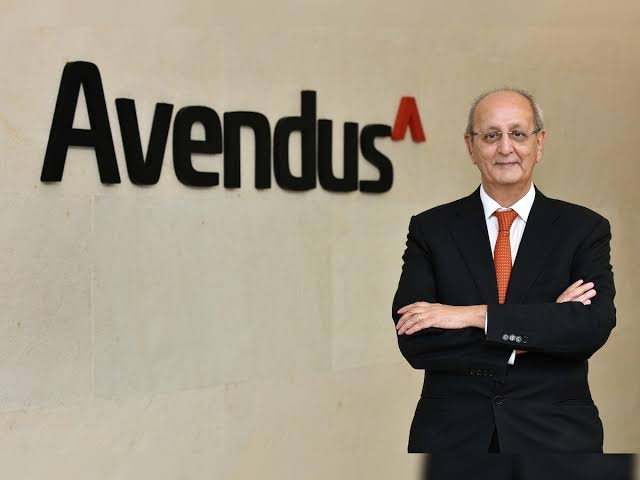
Avendus is one of the most established names in India’s alternative investment and wealth-management industry.
The group manages several alternative strategies and has been associated with Category III structures for years. Regulatory disclosures identify Avendus Alternate India Fund as a SEBI-registered Category III AIF, while Avendus has also managed equity-opportunity strategies within the Category III framework.
What makes Avendus important is its institutional platform. The company operates across investment banking, wealth management, institutional equities and asset management, giving its alternative-investment teams access to a broad financial ecosystem.
Known for: Alternative investments, sophisticated equity strategies, institutional clients and wealth management.
2. Abakkus Asset Manager
Abakkus has become one of the most recognised home-grown names in India’s high-end equity-management industry.
Founded by veteran investor Sunil Singhania, Abakkus operates PMS, private equity and multiple AIF structures. Its regulatory disclosures show both Abakkus Growth Fund and Abakkus India Equity Trust registered as Category III AIFs.
Its Category III offerings include multiple equity strategies, and the firm has received industry recognition for its Category III long-only products.
Abakkus is particularly associated with bottom-up stock selection and opportunities across large-, mid- and smaller-cap Indian businesses.
Known for: Category III AIFs, fundamental equity investing and experienced portfolio management.
3. True Beacon
True Beacon is one of the companies most closely associated with the modern Indian hedge-fund model.
The Bengaluru-based investment firm was co-founded by Nikhil Kamath and Nithin Kamath, names already well known in India’s financial-services industry. True Beacon focuses on public-market investment solutions for sophisticated investors.
Its domestic True Beacon AIF is registered as a Category III AIF, while the group also maintains a Category III structure at GIFT City.
True Beacon has traditionally differentiated itself through a risk-conscious approach designed to participate in Indian equity opportunities while limiting unnecessary market exposure.
Known for: Hedge-fund-style investing, HNI clients, long-short strategies and risk management.
4. Helios Capital
Helios Capital is one of the most respected India-focused alternative managers on the list.
The organisation has investment operations in Singapore and Mumbai and has a long history of managing Indian equities. Helios India acts as investment manager to the Helios India Alternate Fund, which is registered with SEBI as a Category III AIF.
The wider Helios group is strongly associated with veteran investor Samir Arora. Its Helios Strategic Fund has received multiple nominations and awards from international hedge-fund industry organisations over its long history.
Known for: India-focused equities, offshore institutional investors and long investment-management experience.
5. Carnelian Asset Management & Advisors
Carnelian has developed quickly into a respected Indian portfolio and alternative-investment manager.
The company manages Carnelian Alternative Investment Trust, registered as a Category III AIF. Its IFSC operation also manages Category III schemes including Carnelian India AmritKaal Fund and Carnelian India Multi Strategy Fund.
Carnelian’s own research highlights the flexibility available to Category III managers, including long-short equity, arbitrage and other tactical strategies.
The firm has built its reputation around fundamental research, portfolio construction and risk-conscious investing.
Known for: Multi-strategy investing, Category III AIFs and fundamental equity research.
6. WhiteOak Capital
WhiteOak Capital is another major institutional-quality investment manager with substantial Indian and overseas operations.
Founded by Prashant Khemka, who previously held senior investment roles at Goldman Sachs Asset Management, WhiteOak has created several Category III AIFs in India.
Its regulatory disclosures list White Oak India Equity Fund II, White Oak India Select Equity Fund and additional WhiteOak equity funds as registered Category III AIFs.
The company follows a bottom-up, fundamental stock-selection philosophy rather than relying heavily on broad market calls.
Known for: Institutional equity management, Category III AIFs and global investment expertise.
7. Motilal Oswal Asset Management Company
Motilal Oswal is better known to the public for mutual funds and broking, but its alternative-investment platform is substantial enough to place it among the important Category III managers.
Motilal Oswal AMC operates the Motilal Oswal Alternative Investment Trust, registered as a Category III AIF, and describes itself as a significant participant in the Category III long-only equity segment.
The broader AMC crossed ₹2 lakh crore in combined assets across mutual funds, PMS and AIF businesses in August 2026.
Known for: Equity investing, alternative funds, PMS and a large domestic investment platform.
8. Nuvama Asset Management
Nuvama has emerged as a major name in wealth and alternative asset management in India.
Its platform manages multiple AIF structures, including Nuvama Alternative Strategies Trust and Nuvama India Equity Strategies Trust, both classified as Category III AIFs.
The company has also highlighted growing interest among wealthy Indian investors in long-short, quantitative and absolute-return strategies as an alternative to traditional long-only portfolios.
Nuvama’s large wealth-management network gives it particularly strong access to HNIs and family offices.
Known for: Alternative strategies, wealth management, sophisticated investors and Category III AIFs.
9. SageOne Investment Managers
SageOne has built a strong reputation among investors looking for concentrated, high-conviction Indian equity strategies.
The Pune-based investment manager offers PMS and Category III AIF products. Its SageOne India Opportunity Trust is registered as a Category III AIF, while the company also operates an offshore Category III fund through GIFT City.
Its open-ended Category III offering focuses on high-growth Indian businesses and combines core and smaller-company investments with selected QIP and private-placement opportunities.
Known for: Growth equities, concentrated portfolios and HNI-focused investment management.
10. Unifi Capital
Chennai-based Unifi Capital has been managing money for sophisticated investors since 2001 and has developed a significant PMS and AIF franchise.
Its alternative platform includes several Category III schemes under the Unifi Umbrella AIF, as well as the SEBI-registered Unifi High Yield Fund.
Unifi is known for developing differentiated investment themes rather than simply tracking standard equity benchmarks.
Its long operating history gives it a place among India’s better-established specialist investment managers.
Known for: Thematic investing, PMS, Category III AIFs and long-term equity research.
How Are Hedge Funds Different From Mutual Funds?
The biggest difference is flexibility.
A normal equity mutual fund primarily invests investors’ money in shares according to a stated mandate. A Category III AIF can potentially use derivatives, short positions, arbitrage and leverage to create very different return patterns.
That flexibility also means higher complexity and potentially greater risk. Hedge-fund-style strategies depend heavily on the quality of the investment manager, risk controls and execution.
Who Can Invest in Hedge Funds in India?
AIFs are primarily designed for sophisticated and high-net-worth investors rather than ordinary retail investors. The minimum investment for most investors in an Indian AIF is generally ₹1 crore, subject to regulatory provisions and certain exceptions.
Investors should therefore examine the fund manager’s track record, investment strategy, leverage policy, liquidity terms, fees, drawdowns and risk-management process before committing money.
Frequently Asked Questions
Q1. Are hedge funds legal in India?
Yes. Hedge funds can operate within India’s regulated Alternative Investment Fund framework, particularly under Category III AIF rules.
Q2. Which are the leading hedge-fund-style managers in India?
Avendus, Abakkus, True Beacon, Helios Capital, Carnelian, WhiteOak, Motilal Oswal, Nuvama, SageOne and Unifi are among the established managers operating Category III or comparable alternative-investment strategies.
Q3. Can hedge funds make money when the stock market falls?
Some strategies can potentially benefit from falling markets through short positions or derivatives. However, this does not mean that hedge funds are protected from losses. Incorrect positions, leverage or sudden market moves can also create significant losses.
Q4. Are hedge funds suitable for small investors?
Generally, no. They are complex products aimed mainly at wealthy and sophisticated investors. For most retail investors, diversified mutual funds remain considerably easier to understand and access.
India’s hedge-fund industry is still smaller and structurally different from those of the United States or Europe, but it is expanding rapidly. With Category III AIF commitments crossing ₹3 lakh crore by March 2026, alternative strategies are becoming an increasingly important part of portfolios belonging to HNIs, family offices and institutional investors.