Turning agricultural produce into packaged and marketable food can create far more value than simply selling the raw material. A small entrepreneur processing spices, flour, fruits, vegetables, pickles, edible products or traditional foods may have a good market opportunity but still need money for machinery, processing space, packaging equipment and other fixed assets.
The PM Formalisation of Micro Food Processing Enterprises Scheme (PMFME) was created to support such micro food-processing businesses. Its biggest attraction is a 35% credit-linked capital subsidy, subject to a maximum subsidy of ₹10 lakh per unit for eligible individual enterprises. The applicant must contribute at least 10% of the project cost, while the remaining requirement is financed through a bank.
PMFME is particularly useful because revised rules permit support for both existing and new micro food-processing enterprises. One District One Product, or ODOP, businesses receive preference, but eligible non-ODOP food-processing projects can also be considered.
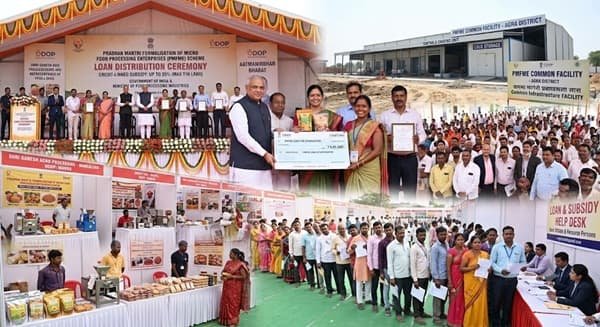
The scheme continues to be actively implemented in 2026. In July 2026, the Ministry of Food Processing Industries announced that more than two lakh credit-linked loans had been sanctioned under PMFME.
What Is the PMFME Scheme?
PMFME stands for Prime Minister Formalisation of Micro Food Processing Enterprises.
The scheme is implemented by the Ministry of Food Processing Industries and aims to help small food processors improve technology, formalise their businesses, obtain institutional finance and improve product quality and marketing.
Support is available for areas such as:
- Setting up eligible new micro food-processing units
- Expansion or modernisation of existing units
- Machinery and processing equipment
- Technical civil works
- FPO, cooperative and SHG projects
- Common processing infrastructure
- Branding and marketing
- Training and capacity building
- Seed capital for eligible SHG members
The scheme follows a credit-linked structure, which means the subsidy is connected with a bank-financed project rather than being given as a standalone cash grant.
How Much Subsidy Is Available Under PMFME?
For an eligible individual micro food-processing enterprise, assistance is:
35% of eligible project cost, subject to a maximum subsidy of ₹10 lakh per unit.
The applicant must contribute at least 10% of total project cost from their own resources, while the remaining amount is normally financed through a bank loan.
Example of PMFME Subsidy
Suppose an eligible food-processing project has an approved project cost of ₹20 lakh.
At 35%, the eligible capital subsidy would be:
- Project cost: ₹20 lakh
- 35% subsidy: ₹7 lakh
- Minimum applicant contribution at 10%: ₹2 lakh
- Remaining financing: normally through the bank, subject to appraisal
Now suppose the eligible project cost is ₹40 lakh.
Thirty-five percent would mathematically be ₹14 lakh, but the subsidy for an individual unit is capped at ₹10 lakh.
Therefore, the applicant cannot receive more than ₹10 lakh merely because the project is larger.
What Costs Are Eligible for the 35% Subsidy?
One of the most important PMFME rules concerns what is counted as eligible project cost.
The subsidy can cover approved expenditure on:
- Plant and machinery
- Food-processing equipment
- Packaging machinery
- Technical civil works required for the processing unit
However, land cost, rent and lease cost of a workshed are excluded from eligible project cost.
Technical civil works can constitute no more than 30% of the eligible project cost.
This means an applicant should not prepare a project report in which most of the cost consists of construction while only a small portion is allocated to actual food-processing machinery.
Is Working Capital Eligible for Subsidy?
A bank may sanction need-based working capital along with the project loan.
Working capital can help meet expenses such as:
- Raw materials
- Packaging material
- Wages
- Electricity
- Transport
- Inventory
- Routine production costs
However, the revised PMFME guidelines clearly state that no PMFME capital subsidy is provided on the working-capital portion.
The 35% benefit applies to eligible capital investment rather than every rupee borrowed from the bank.
Who Is Eligible for PMFME?
Financial assistance can be available to eligible:
- Individual entrepreneurs
- Proprietorship firms
- Partnership firms
- Farmer Producer Organisations
- NGOs
- Cooperatives
- Self Help Groups
- Private limited companies
Both enterprises already operating and applicants proposing to establish a new eligible micro food-processing unit can receive assistance.
Age Requirement
An individual applicant must be above 18 years of age.
Educational Qualification
Older PMFME information sometimes says that an applicant must have passed Class VIII.
That requirement was changed. The Ministry’s May 2022 revised guidelines specifically state that no minimum educational qualification is required for an individual applicant.
Applicants should therefore rely on the revised rule rather than older FAQs circulating online.
Are New Food Processing Units Eligible?
Yes.
Originally, PMFME was strongly associated with formalisation and upgrading of existing unorganised food-processing units. However, the revised guidelines now allow assistance for:
- Expansion or upgrading of existing micro food-processing units
- Establishment of new micro food-processing units
This is an important benefit for first-time food entrepreneurs planning a qualifying processing business.
Is an ODOP Product Compulsory?
No, but ODOP projects receive preference.
Under the One District One Product approach, each district identifies a particular food product or agricultural produce with local potential.
Examples can include:
- Mango products
- Turmeric
- Millets
- Spices
- Groundnut processing
- Fruit processing
- Traditional foods
- Fisheries-based processed products
A project involving the district’s ODOP product is preferred, but the revised guidelines permit other eligible micro food-processing enterprises as well.
Therefore, applicants should not automatically abandon an otherwise eligible project simply because it is not their district’s ODOP product.
Which Activities Are Not Eligible?
PMFME supports food processing, not ordinary trading or food-service businesses.
The revised negative list includes activities such as:
- Trading and selling unprocessed cereals, millets or spices
- Selling loose or unprocessed milk or curd
- Trading fresh fruits and vegetables
- Trading unprocessed minor forest produce
- Beekeeping or loose sale of honey
- Loose selling, trading or simple repacking of oil
- Poultry, piggery, goat rearing or other livestock-rearing activity itself
- Trading fresh fish, meat or chicken
- Simple repacking of manufactured products
- Grocery stores
- Canteens
- Hotels
- Tiffin services
- Restaurants and other food-service enterprises
Some specific activities have additional exceptions or conditions.
For example, processing milk into packaged value-added products can be different from merely selling loose milk. The exact activity should therefore be checked before submitting the DPR.
Documents Required for PMFME Loan
Document requirements can vary by applicant and bank, but commonly required papers include:
- Aadhaar card
- PAN card
- Photograph
- Address proof
- Bank account details
- Detailed Project Report
- Machinery quotations
- Business ownership documents
- Land, lease or rental documents for the premises
- Existing business financial statements, where applicable
- Partnership or company documents, where applicable
- FSSAI-related documents
- Udyam Registration
- GST registration, where applicable
- Required local or statutory approvals
For an existing unit, the bank may also ask for past turnover, sales and bank-account records.
How To Apply for PMFME Loan
Step 1: Select the Food Processing Activity
First decide exactly what will be processed and sold.
A strong project converts raw material into a genuine value-added food product rather than merely trading or repacking an existing product.
Step 2: Check ODOP and Activity Eligibility
Find your district’s ODOP product and determine whether the proposed activity is eligible.
ODOP projects receive preference, but other qualifying food-processing projects may also be considered.
Step 3: Prepare a Detailed Project Report
The DPR should cover:
- Product to be manufactured
- Production capacity
- Raw-material availability
- Machinery
- Building requirements
- Packaging
- Market demand
- Total project cost
- Applicant contribution
- Bank finance
- Sales projection
- Expenses
- Profitability
- Loan repayment capacity
The figures should be supported by realistic quotations and market assumptions.
Step 4: Register on the PMFME Portal
The official PMFME portal currently provides Applicant Registration for New Users, Applicant Login and online application tracking facilities.
Register using genuine personal and business details and complete the application for the appropriate category.
Step 5: Work With the District Resource Person
For individual applications, a District Resource Person (DRP) assists with handholding and examination of the proposal.
Individual applications generally move through:
Applicant → DRP → District Nodal Officer/District Committee → Lending Bank
The District Nodal Officer can review the DPR, KYC, premises documents, financial statements and applicable statutory permissions before recommending the proposal to the preferred bank.
Step 6: Bank Appraisal
The bank makes the final credit assessment.
It can examine:
- CIBIL history
- Existing debt
- Promoter contribution
- Machinery cost
- Business viability
- Expected turnover
- Raw-material supply
- Market potential
- Repayment capacity
Being eligible under PMFME does not guarantee bank sanction.
What Is the Interest Rate on a PMFME Loan?
PMFME does not prescribe one fixed subsidised interest rate for all borrowers.
The bank charges its applicable business/MSME lending rate based on its benchmark, borrower profile and credit assessment.
PMFME’s main financial benefit is the 35% capital subsidy, rather than a standard low-interest loan.
Eligible projects that also independently qualify under another government programme may sometimes obtain convergence benefits, subject to the current rules of that programme.
Is Collateral Required?
The PMFME implementation manual provides for eligible loans of up to ₹2 crore to be covered through MUDRA/CGTMSE without conventional collateral, subject to guarantee requirements and the borrower’s agreement to applicable guarantee fees.
The bank will still normally take primary security over assets purchased with the loan.
Security treatment should always be confirmed with the lender before assuming that no documentation or charge over financed assets is required.
How Is the PMFME Subsidy Released?
PMFME subsidy is not normally handed to the entrepreneur as cash.
After the bank loan is sanctioned and disbursement begins, the eligible grant is routed through the prescribed banking system and kept in a transient account for three years. No interest is charged on the grant portion of the term loan during this period.
The subsidy is eventually adjusted subject to compliance with scheme conditions and satisfactory operation of the unit.
Support for SHGs and Common Infrastructure
PMFME also contains separate benefits for groups.
Eligible SHG members involved in food processing can receive seed capital of ₹40,000 per member for working capital and purchase of small tools.
For qualifying common infrastructure projects of FPOs, FPCs, cooperatives, SHGs and similar eligible organisations, the present portal states a 35% credit-linked capital subsidy up to ₹3 crore.
These group components should not be confused with the ₹10 lakh maximum subsidy applicable to an individual micro food-processing unit.
Common Reasons PMFME Applications Face Problems
Applications can be delayed or rejected because of:
- Activity falling on the negative list
- Weak project report
- Unrealistic machinery costs
- Insufficient own contribution
- Poor credit history
- Missing premises documents
- Lack of statutory approvals
- No clear market for the finished product
- Incorrect subsidy calculation
- Excessive technical civil-work cost
- Treating working capital as eligible for capital subsidy
Applicants should first establish the commercial viability of the business and then calculate the subsidy.
Conclusion
PMFME can provide significant support to a genuine micro food-processing enterprise through a 35% credit-linked capital subsidy of up to ₹10 lakh. The best applications combine an eligible processing activity, realistic DPR, at least 10% own contribution and a project that can comfortably repay the bank loan.