Fast food in India is no longer just about burgers and fries. It has become a massive lifestyle and convenience industry connected to students, office workers, families, food delivery apps, malls, highways, late-night eating culture, and social hangouts.
A few decades ago, most Indians depended mainly on traditional home-cooked meals and local restaurants. Today, urban lifestyles, busy work schedules, affordable eating options, and changing food habits have transformed the fast-food market completely.
From momos, rolls, pizzas, burgers, fried chicken, sandwiches, pav bhaji, shawarma, noodles, and chaats to fusion street food and cloud kitchens, fast food now dominates a huge portion of India’s daily eating economy.
At the same time, food-delivery apps and social-media food culture have accelerated demand rapidly across cities and towns.
This has transformed fast food into one of India’s strongest and most scalable food-business opportunities.
Unlike fine-dining restaurants that depend heavily on ambience and long dining experiences, fast-food businesses focus more on speed, affordability, convenience, and repeat customer traffic.
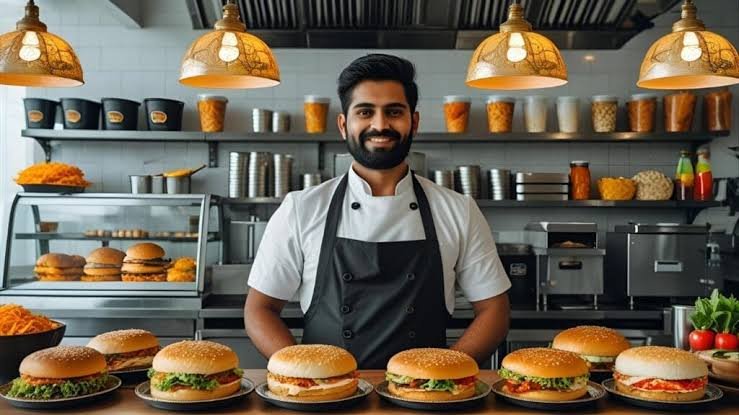
A Business Connected to Urban Lifestyle and Convenience Culture
India’s quick-service food market continues expanding rapidly every year.
Several factors continue driving fast-food demand:
- Growth of food-delivery apps
- Rising urban population
- Busy work and student lifestyles
- Increasing youth spending
- Expansion of mall and street-food culture
- Affordable eating preferences
Fast food today is consumed across almost every income group.
Types of Fast Food Businesses
1. Street Fast Food Stall
Low-investment local snack and quick-meal setup.
2. Quick Service Restaurant (QSR)
Organized dine-in and takeaway fast-food outlet.
3. Cloud Kitchen Fast Food Business
Delivery-focused food operation without dine-in seating.
4. Franchise Fast Food Outlet
Operating under an established food brand.
5. Food Truck Business
Mobile fast-food setup serving multiple locations.
6. Regional and Fusion Fast Food Brand
Combining local flavors with modern fast-food concepts.
Investment Required: Low to High
Fast-food businesses are highly flexible depending on scale.
A small roadside stall or takeaway setup may require ₹50,000–₹5 lakh including:
- Cooking equipment
- Initial inventory
- Licenses and permits
- Branding and packaging
- Small rental space
A branded QSR outlet or franchise may require ₹20 lakh–₹5 crore or more depending on location and brand.
Taste consistency and location often matter more than luxury interiors initially.
Revenue and Profit Potential
Fast-food businesses can become highly profitable because of strong repeat demand and high daily order volume.
Revenue sources may include:
- Walk-in customer sales
- Food-delivery app orders
- Combo meals and beverages
- Franchise expansion
- Catering and party orders
- Late-night food delivery
For example:
- Delivery-focused kitchens reduce infrastructure costs significantly.
- Combo meals improve average billing value.
- Youth-heavy locations often generate continuous customer flow.
A well-managed fast-food business can generate strong daily cash flow. Net profit margins generally range between 15–35% depending on food costs, branding, and operational efficiency.
Businesses with strong delivery presence and signature taste often scale especially fast.
What Makes This Business Successful
1. Taste Consistency
Customers return mainly because of flavor reliability.
2. Speed of Service
Fast delivery and preparation are extremely important.
3. Affordable Pricing
Value-for-money strongly influences repeat customers.
4. Good Location
High-footfall areas improve sales significantly.
5. Strong Online Delivery Presence
Food-delivery platforms now drive major revenue.
Challenges to Prepare For
1. Heavy Competition
Fast-food markets are extremely crowded.
2. Food-Cost Fluctuation
Oil, meat, dairy, and ingredient prices can vary heavily.
3. Hygiene and Food Safety
Cleanliness directly affects reputation.
4. Staff Management
Kitchen operations require constant supervision.
5. Maintaining Taste During Expansion
Scaling quality consistently can become difficult.
Fast-food businesses that build strong brand identity and customer loyalty usually survive competition much better than purely discount-based operators.
How to Increase Profitability
1. Focus on Signature Items
Unique taste creates stronger customer recall.
2. Use Cloud Kitchen Model Initially
Lower investment reduces financial risk.
3. Build Strong Instagram and Food-Marketing Presence
Food visuals attract customers extremely effectively.
4. Add Combo and Meal Deals
Higher order values improve margins.
5. Expand Through Multiple Small Outlets
Fast-food businesses scale well through repeatable systems.
Fast Food Business vs Traditional Restaurant Business
Traditional restaurants usually manage larger menus, heavier staffing, and higher operational complexity. Fast-food businesses focus more on quick preparation, delivery efficiency, and standardized products.
This creates stronger scalability and faster customer turnover.
However, competition and price sensitivity are also much higher.
The Future of Fast Food Business in India
The future remains extremely strong. India’s youth population, food-delivery culture, urban lifestyle changes, and online ordering habits continue expanding rapidly.
Regional fast food, fusion snacks, healthier fast-food options, and late-night delivery models are also likely to create fresh opportunities in coming years.
At the same time, consumers increasingly discover food brands through Instagram reels, influencers, and delivery apps rather than traditional advertising.
The Verdict
Fast food is no longer limited to small roadside stalls or Western-style burger chains. It has evolved into one of India’s largest food-service industries connected closely to convenience, youth culture, online delivery, and urban eating habits.
Entrepreneurs who maintain strong taste consistency, fast service, hygiene standards, and effective branding often build highly profitable food businesses with strong repeat-customer demand.
In a country where food culture, online delivery, and convenience eating continue growing rapidly every year, fast food is likely to remain one of India’s strongest long-term food-business opportunities.
Frequently Asked Questions (FAQs)
Q1. Which fast-food category is usually most profitable?
Burgers, fried chicken, momos, pizzas, shawarma, and regional fusion snacks often perform strongly.
Q2. Why is fast-food demand increasing rapidly in India?
Because of urban lifestyles, food-delivery apps, affordable pricing, and changing eating habits among younger consumers.
Q3. Is location important in fast-food business?
Extremely important. Areas near colleges, offices, malls, and busy streets usually perform much better.
Q4. What is the biggest challenge in fast-food business?
Maintaining taste consistency and surviving intense competition are major challenges.
Q5. Can small local fast-food brands compete against big chains?
Absolutely. Many local brands succeed because of unique taste, affordable pricing, and regional flavor appeal.
Q6. Is online food delivery important for fast-food businesses today?
Very important. Food-delivery apps now drive a major portion of fast-food sales in urban India.