Starting a business requires entrepreneurs to make several important decisions, including choosing the right business model. In the trading industry, wholesale and retail businesses are two popular options. Both involve purchasing products from manufacturers or suppliers and selling them to customers, but their operating methods, investment requirements, pricing strategies and profit potential are different.
A wholesale business sells products in large quantities, usually to retailers, distributors or other businesses. A retail business sells products directly to individual consumers, generally in smaller quantities. While wholesalers often earn lower margins per unit, they can generate revenue through high-volume transactions. Retailers may earn higher margins on individual products but need to handle more customers and transactions.
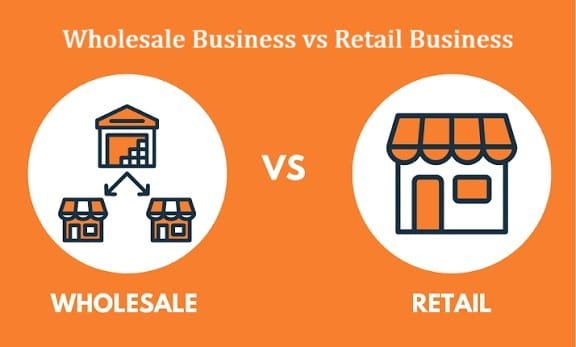
For entrepreneurs planning to enter the trading industry, understanding these differences is essential. The better option depends on available capital, market demand, supplier relationships, storage facilities and business management capabilities.
What Is a Wholesale Business?
A wholesale business involves purchasing products in bulk from manufacturers, importers or distributors and selling them in larger quantities to retailers, institutions or other businesses.
Wholesalers generally operate as intermediaries between manufacturers and retailers. They help distribute products across different markets and make it easier for smaller businesses to access goods without purchasing directly from manufacturers.
Common examples of wholesale businesses include:
- Grocery and food products wholesale
- Clothing and textile wholesale
- Electronics and mobile accessories wholesale
- Pharmaceutical distribution
- Building materials wholesale
- Stationery and office supplies wholesale
Wholesale businesses usually depend on bulk purchasing, supplier relationships, warehouse management and distribution networks.
What Is a Retail Business?
A retail business sells products directly to final consumers for personal or household use. Retailers purchase products from wholesalers, distributors or manufacturers and sell them individually or in smaller quantities.
Retail businesses can operate through physical stores, online platforms or a combination of both.
Common examples include:
- Grocery stores and supermarkets
- Clothing and footwear shops
- Electronics stores
- Beauty and cosmetics shops
- Furniture stores
- Online retail businesses
Retailers focus on customer service, product presentation, pricing, marketing and customer experience. Their success often depends on attracting customers and encouraging repeat purchases.
Wholesale Business vs Retail Business: Key Differences
| Basis | Wholesale Business | Retail Business |
| Customers | Retailers and other businesses | Individual consumers |
| Sales quantity | Large quantities | Individual or small quantities |
| Profit margin | Generally lower per unit | Often higher per unit |
| Investment | Usually higher working capital | Depends on store size and inventory |
| Storage | Larger storage facilities may be required | Smaller storage may be sufficient |
| Marketing | Focuses on business relationships | Focuses on consumer promotion |
| Transactions | Fewer, larger transactions | More frequent, smaller transactions |
| Customer service | Business-to-business support | Direct consumer service |
| Pricing | Bulk and negotiated pricing | Retail pricing |
| Main focus | Volume and distribution | Customer experience and sales |
Initial Investment Requirements
Investment requirements differ significantly between wholesale and retail businesses.
A wholesale business generally requires substantial working capital because products must be purchased in bulk. Entrepreneurs may also need warehouses, transportation facilities, inventory management systems and distribution arrangements.
For example, a grocery wholesaler may need to purchase large quantities of rice, flour, cooking oil and packaged food products. This requires sufficient capital to maintain stock and fulfil bulk orders.
A retail business can often be started with a smaller investment, particularly when operating from a small shop or through an online store. However, investment depends on the product category, location, store size and inventory requirements.
Retailers may need to spend money on shop interiors, display shelves, billing systems, packaging and advertising.
Which is better? Retail businesses are generally more accessible to entrepreneurs with limited capital, while wholesale businesses may require stronger financial resources.
Profit Margins and Revenue Potential
Profit potential is one of the biggest considerations when comparing wholesale and retail businesses.
Wholesalers generally earn lower profit margins per unit because they sell products in bulk at discounted prices. However, they can generate significant revenue through large orders and repeat purchases from retailers.
Retailers usually sell products at higher prices per unit. This can provide better gross margins, but they must also manage expenses such as rent, salaries, electricity, advertising, packaging and payment processing.
For example, a wholesaler may earn a small margin on each unit but sell thousands of units to retailers. A retailer may earn a higher margin on each unit but sell fewer units individually.
Therefore, higher retail margins do not automatically mean higher net profits. Similarly, high wholesale sales do not guarantee profitability if operating costs, credit losses or unsold inventory are poorly managed.
Inventory and Storage Management
Wholesale businesses usually handle large quantities of products. This makes inventory management an important part of their operations. They need sufficient storage space, organised stock records and reliable systems for receiving and dispatching goods.
Some products may also require special storage conditions. Food products, medicines and temperature-sensitive goods need appropriate handling to maintain quality.
Retail businesses generally maintain smaller quantities of products, although supermarkets and large retail stores may also require substantial inventory facilities.
Retailers must focus on product availability, attractive displays, stock rotation and avoiding dead inventory. Products that remain unsold for long periods can block working capital.
Customer Base and Marketing Strategy
Wholesale businesses primarily serve retailers, distributors, institutions and other commercial buyers. Building long-term relationships is essential because repeat orders can provide stable revenue.
Wholesale marketing often involves direct sales, business networking, trade exhibitions, product catalogues and distributor relationships. Competitive pricing and reliable delivery can help wholesalers retain customers.
Retail businesses target individual consumers. Their marketing strategies may include local advertising, social media promotions, discounts, loyalty programmes and online campaigns.
Retailers also need to focus on customer satisfaction, product quality and convenient shopping experiences.
Risks and Business Challenges
Both business models involve risks, but their challenges are different.
Wholesale businesses may face:
- High working capital requirements
- Delayed payments from business customers
- Warehouse and transportation expenses
- Price fluctuations
- Large unsold inventory
- Dependence on a limited number of major buyers
Retail businesses may face:
- Strong local competition
- High rental expenses
- Changing consumer preferences
- Product returns and customer complaints
- Marketing and promotional costs
- Unsold or outdated stock
Wholesalers can reduce risks by maintaining reliable buyers, controlling credit exposure and diversifying suppliers. Retailers can improve performance through demand forecasting, customer service and effective inventory management.
Which Business Offers Better Profit Potential?
There is no universal answer because profitability depends on the products sold, market demand, business expenses and operational efficiency.
A wholesale business may offer better profit potential for entrepreneurs who have sufficient working capital, access to manufacturers and the ability to build a strong distribution network. Its volume-based model can support substantial sales when the business develops reliable retail customers.
A retail business may be more suitable for entrepreneurs who want direct customer relationships and greater control over pricing, product presentation and branding. It can also be easier to test a business idea on a smaller scale.
Before selecting a model, entrepreneurs should calculate expected gross margins, operating expenses, inventory costs, credit requirements and break-even sales.
Conclusion
Wholesale and retail businesses offer different opportunities in the trading industry. Wholesale businesses focus on bulk sales, distribution and business relationships, while retail businesses concentrate on individual customers, product presentation and shopping experiences.
Wholesale businesses can generate substantial revenue through high-volume transactions, but they generally require greater working capital and efficient distribution systems. Retail businesses may offer higher margins per unit and lower entry barriers, although customer acquisition and operating expenses can affect profitability.
If you have sufficient capital and strong supplier connections, wholesale trading may be a suitable option. If you prefer direct customer interaction and want to start with a comparatively smaller operation, retail business may be more practical.
Ultimately, the better business model is the one that matches your investment capacity, market opportunities and ability to manage costs.
Frequently Asked Questions (FAQs)
Q. Is wholesale business more profitable than retail business?
Wholesale businesses can generate higher overall revenue through bulk transactions, while retail businesses may earn higher margins per unit. Actual profitability depends on expenses, sales volume and product demand.
Q. Which business requires less investment: wholesale or retail?
Retail businesses generally require less initial investment, especially when started through a small shop or online platform. Wholesale businesses often require more working capital and storage facilities.
Q. Can a beginner start a wholesale business?
Yes. Beginners can start a wholesale business by selecting a specific product category, identifying reliable suppliers and developing relationships with retailers. However, they should carefully assess capital and credit requirements.
Q. What are the most profitable wholesale business ideas in India?
Potential opportunities include grocery products, clothing, electronics accessories, building materials, packaging supplies and stationery. Profitability depends on local demand, competition and supplier pricing.
Q. Can a retail business purchase products directly from manufacturers?
Yes. Retailers can purchase directly from manufacturers if the supplier accepts their order quantity and commercial terms. This may reduce intermediary costs but could require larger purchases.
Q. Can I run a wholesale and retail business together?
Yes. A business can operate both wholesale and retail channels. However, it needs separate pricing strategies, inventory planning and customer management to avoid conflicts between wholesale buyers and retail customers.