Agriculture today extends far beyond crop cultivation. Cold storage units, food-processing plants, seed businesses, farm machinery centres, dairy enterprises, warehouses, grading units, agri-input businesses and Farmer Producer Organisations are all part of India’s growing agribusiness sector. These businesses often require much larger and longer-term finance than a normal seasonal crop loan.
An agri business loan is designed for such commercial agriculture and allied activities. Depending on the project, a borrower may obtain a term loan for machinery and infrastructure, working-capital finance for daily operations, or a combination of both. Government schemes can also reduce the financing burden through interest subvention, capital subsidy or credit-guarantee support.
There is, however, no single government-fixed interest rate for all agribusiness loans. Normal bank loans are generally linked to the lender’s benchmark and the borrower’s credit profile. Special schemes such as the Agriculture Infrastructure Fund provide an interest subsidy, while PMFME and PMEGP provide different forms of credit-linked subsidy.
Understanding which scheme fits the proposed business is therefore more important than simply looking for the lowest advertised loan rate.

What Is an Agri Business Loan?
An agribusiness loan provides finance for businesses connected with agriculture, agricultural produce or allied activities.
Eligible activities can include:
- Food and agro processing
- Warehouses and godowns
- Cold storage
- Pack houses
- Sorting and grading facilities
- Seed processing
- Agricultural input manufacturing
- Farm machinery and custom-hiring centres
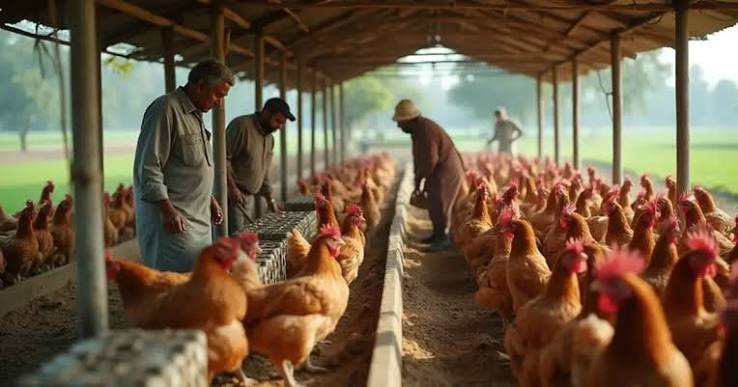
- Dairy and livestock businesses
- Poultry and fisheries
- Primary processing
- Agricultural logistics
- Agri-export businesses
- FPO activities
- Farm technology and precision agriculture
- Nursery and tissue-culture businesses
Banks may offer both term loans and working-capital facilities depending on the project.
For example, SBI’s Agri & Food Enterprises Loan provides term loans, cash credit, bank guarantees, letters of credit and other facilities to qualifying food processors, agri-input manufacturers, exporters, FPOs and allied agricultural businesses.
Who Is Eligible for an Agri Business Loan?
Eligibility differs according to the bank and government scheme, but possible borrowers include:
- Individual farmers
- Agri entrepreneurs
- Proprietorship firms
- Partnership firms
- LLPs
- Private limited companies
- Farmer Producer Organisations
- Cooperatives
- Self Help Groups
- Joint Liability Groups
- Agricultural startups
- Food-processing enterprises
The bank normally examines whether the proposed activity is commercially viable rather than approving finance solely because it relates to agriculture.
Main Eligibility Conditions Banks Check
Experience and Business Knowledge
For a large commercial project, the promoter should understand the proposed activity. Banks may prefer relevant experience, technical qualifications or trained employees.
Project Viability
The business should generate sufficient income to meet operating expenses and loan repayments.
The bank may analyse:
- Project cost
- Sales projections
- Profitability
- Cash flow
- Market demand
- Raw-material availability
- Break-even period
- Debt repayment ability
Credit History
CIBIL or other credit-bureau records can be checked for the promoter and business.
Existing overdue loans, settlements or serious repayment defaults can reduce the chances of approval.
Promoter Contribution
Most commercial agricultural projects require the entrepreneur to contribute part of the project cost.
The percentage differs according to the scheme and bank. It may range from around 10% upward depending on the nature and size of the project.
Required Permissions
A food-processing, warehouse, cold-storage or livestock project may require approvals such as:
- Udyam Registration
- FSSAI registration or licence
- GST registration
- Pollution-control approval
- Local authority permission
- Factory-related approvals
- Land-use permission
- Other sector-specific licences
Not every approval is required for every business.
How Much Agri Business Loan Can You Get?
There is no universal maximum.
Loan size depends primarily on the project cost and repayment capacity.
For example, SBI’s Agri & Food Enterprises Loan currently provides need-based finance ranging from ₹1 lakh to ₹100 crore for qualifying agricultural and food enterprises. The maximum repayment period is up to 10 years, including a moratorium of up to 24 months.
A small food-processing business may therefore borrow only a few lakh rupees, while a professionally structured storage or processing project may require several crore.
Interest Rates on Agri Business Loans
Interest rates fall broadly into two categories.
Normal Bank Agribusiness Loans
These loans generally have a benchmark-linked interest rate.
For example, SBI states that under its Agri & Food Enterprises Loan:
- Loans up to ₹50 lakh are priced at EBLR + 2%
- Loans above ₹50 lakh are priced at EBLR plus a credit-risk premium of 0.95% to 2%
The final effective rate therefore changes whenever the applicable benchmark changes and can also depend on the borrower’s risk profile.
This is why borrowers should always ask for the current effective annual rate, not rely on an old interest-rate figure found online.
Agriculture Infrastructure Fund
The Agriculture Infrastructure Fund (AIF) is one of the most important financing programmes for agricultural infrastructure.
Eligible projects include:
- Warehouses
- Silos
- Cold storage
- Cold chains
- Pack houses
- Sorting and grading units
- Primary processing centres
- Ripening chambers
- Agricultural logistics
- Farm-waste management
- Seed processing
- Nurseries
- Tissue culture
- Smart and precision agriculture
- Custom-hiring centres
- Certain integrated processing facilities
Eligible borrowers include farmers, FPOs, SHGs, JLGs, cooperatives, agri entrepreneurs, startups and various other approved entities.
AIF Interest Benefit
AIF provides a 3% annual interest subvention on loans up to ₹2 crore.
The interest benefit can continue for a maximum of seven years. Loans can exceed ₹2 crore, but the interest subvention applies only to the eligible amount up to ₹2 crore.
Participating lenders have operated with a maximum interest rate of 9% on the portion covered by interest subvention. A 3% subsidy can therefore significantly reduce the effective borrowing cost on the eligible amount.
Credit-guarantee support is also available for eligible loans up to ₹2 crore.
The AIF scheme continues to receive government support in FY 2026-27, although applicants seeking fresh finance should verify the current sanction/disbursement window with the AIF portal or participating bank because earlier scheme guidelines scheduled the original loan-disbursement phase through FY 2025-26.
PMFME for Micro Food Processing Businesses
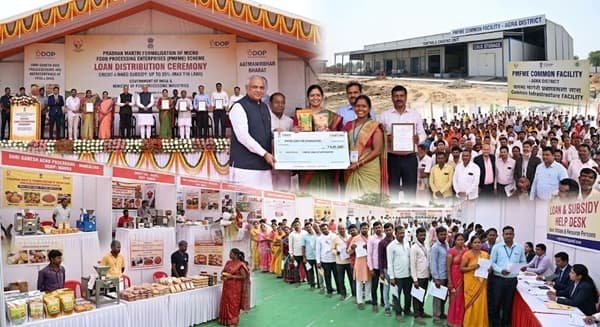
Entrepreneurs involved in food processing should examine the PM Formalisation of Micro Food Processing Enterprises Scheme (PMFME).
The scheme remains active in 2026 and has crossed two lakh credit-linked loan sanctions.
Eligible individual micro food-processing enterprises can receive a 35% credit-linked capital subsidy on eligible project cost, subject to a maximum subsidy of ₹10 lakh.
The beneficiary must contribute at least 10% of the project cost, while the remaining eligible amount is financed through a bank loan.
Possible businesses include:
- Flour and grain processing
- Spice processing
- Fruit and vegetable processing
- Pickles and preserves
- Bakery products
- Oil processing
- Traditional food products
- Other eligible micro food enterprises
FPOs, SHGs and producer cooperatives can also receive support under separate PMFME components.
PMFME provides a capital subsidy, not a standard subsidised interest rate. The interest charged on the bank-financed portion depends on the lender.
PMEGP for New Agri-Linked Enterprises
The Prime Minister’s Employment Generation Programme (PMEGP) can also be relevant for eligible new micro enterprises connected with processing and certain allied agricultural activities.
For new PMEGP units:
- Maximum manufacturing project cost eligible for subsidy: ₹50 lakh
- Maximum business/service project cost: ₹20 lakh
- General-category contribution: 10%
- Special-category contribution: 5%
Margin-money subsidy ranges from 15% to 35% depending on category and whether the unit is in an urban or rural location.
PMEGP is mainly for new non-farm micro enterprises. Direct crop cultivation should not be confused with an eligible processing, service or approved allied activity.
The bank charges its applicable lending rate on the loan portion; PMEGP’s main benefit is its margin-money subsidy rather than a universal low interest rate.
MUDRA Loan for Small Allied Agricultural Businesses
The Pradhan Mantri MUDRA Yojana can finance eligible micro enterprises engaged in manufacturing, trading, services and allied agricultural activities.
The main categories are:
- Shishu: Up to ₹50,000
- Kishore: Above ₹50,000 and up to ₹5 lakh
- Tarun: Above ₹5 lakh and up to ₹10 lakh
- Tarun Plus: Above ₹10 lakh and up to ₹20 lakh for entrepreneurs who have successfully repaid a previous Tarun loan
MUDRA itself does not provide a general capital subsidy. Interest rates are determined by the lending institution.
It may be suitable for smaller agri-service, processing or allied businesses that do not require a large infrastructure loan.
Which Scheme Is Best for Which Agribusiness?
| Business Requirement | Scheme Worth Checking |
| Warehouse or cold storage | Agriculture Infrastructure Fund |
| Pack house/sorting/grading | AIF |
| Micro food-processing unit | PMFME |
| New eligible micro enterprise | PMEGP |
| Small allied agricultural business | MUDRA |
| Large agri or food enterprise | Regular bank agribusiness loan |
| FPO infrastructure project | AIF / applicable FPO schemes |
The final choice depends on the exact activity. An entrepreneur should not select a scheme only because its subsidy percentage looks higher.
Documents Required for an Agri Business Loan
Banks commonly require:
- Aadhaar and PAN
- Business KYC
- Udyam Registration
- Project report or DPR
- Machinery quotations
- Land ownership or lease documents
- Bank statements
- Income-tax returns where applicable
- GST returns for existing businesses
- Financial statements
- Promoter contribution proof
- Licences and approvals
- Existing loan details
Larger projects may also require projected balance sheets, cash-flow statements and detailed technical reports.
How To Improve Approval Chances
A strong agribusiness proposal should explain where raw materials will come from, who will buy the product, how much capacity will actually be used and how the loan will be repaid.
Applicants should also:
- Keep project costs realistic
- Maintain a good credit record
- Arrange promoter contribution beforehand
- Obtain genuine machinery quotations
- Avoid exaggerated sales projections
- Check subsidy eligibility before purchasing equipment
- Select the correct government scheme
- Obtain required licences early
- Compare effective interest rates across banks
The cheapest loan on paper is not always the best choice if it has high processing charges, strict collateral requirements or an unsuitable repayment schedule.
Conclusion
Agri business loans can finance everything from small food-processing units to large warehouses and agricultural enterprises. Interest rates vary by lender, while schemes such as AIF, PMFME and PMEGP can reduce borrowing or project costs in different ways. The right scheme should always be chosen according to the actual business activity and project size.