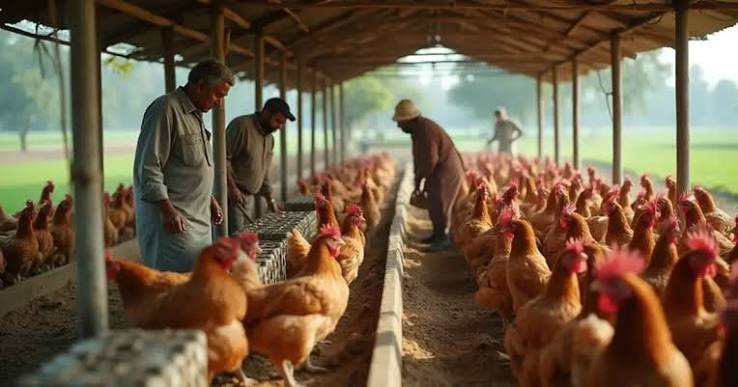
Farming requires money long before the crop starts generating income. Farmers need funds for seeds, fertilisers, pesticides, labour, irrigation, machinery repairs and several other expenses. Depending entirely on informal lenders for these seasonal needs can make agricultural borrowing expensive. The Kisan Credit Card (KCC) Scheme was introduced to give farmers easier access to institutional credit through banks.
A KCC is more flexible than an ordinary one-time agricultural loan. Once a credit limit is sanctioned, an eligible farmer can generally withdraw and repay money within the approved limit according to farming requirements. The scheme covers crop cultivation as well as several post-harvest, household and allied agricultural needs.
Another major benefit is the Modified Interest Subvention Scheme (MISS). Eligible short-term KCC borrowers can receive agricultural credit at a concessional rate, while farmers who repay within the prescribed time can qualify for an additional Prompt Repayment Incentive.
However, there is an important distinction between the overall KCC credit limit, the collateral-free limit and the amount on which concessional interest is actually available. Farmers should understand these separately before applying.

What Is the Kisan Credit Card Scheme?
The Kisan Credit Card Scheme was introduced in 1998 to provide farmers with timely and convenient bank credit.
KCC finance can be used for purposes such as:
- Crop cultivation expenses
- Purchase of seeds and fertilisers
- Pesticides and other agricultural inputs
- Post-harvest expenses
- Produce marketing
- Household consumption requirements connected with the farming cycle
- Repairs and maintenance of farm assets
- Working capital for allied agricultural activities
- Certain investment requirements in agriculture and allied sectors
The scheme has subsequently been expanded to cover activities including animal husbandry, dairy, fisheries and other eligible allied agricultural activities.
Who Is Eligible for a Kisan Credit Card?
KCC coverage is wider than only farmers who own agricultural land.
Eligible applicants can include:
- Individual farmers who are owner-cultivators
- Joint borrowers who jointly cultivate agricultural land
- Tenant farmers
- Oral lessees
- Sharecroppers
- Self Help Groups of farmers
- Joint Liability Groups of farmers
- Groups consisting of tenant farmers or sharecroppers
The scheme also covers eligible farmers engaged in allied activities such as dairy, animal husbandry and fisheries.
For fisheries and aquaculture, the applicant generally needs to own or lease the relevant fisheries-related assets, such as ponds, tanks, boats, hatcheries or other facilities, and hold any authorisation required under the rules of the concerned State.
What Is the KCC Loan Limit?
There is no single fixed KCC amount given to every farmer.
The bank determines the limit according to factors such as:
- Area under cultivation
- Crops being grown
- District scale of finance for those crops
- Cropping pattern
- Post-harvest requirements
- Household consumption needs
- Maintenance of farm assets
- Insurance-related expenses
- Working capital for allied activities
- Long-term agricultural investment requirements
The government stated in 2025-26 that the lending limit under the Modified Interest Subvention framework was being enhanced from ₹3 lakh to ₹5 lakh. Government information published in March 2026 also describes the KCC/MISS lending limit as enhanced to ₹5 lakh.
This does not mean that every farmer automatically gets ₹5 lakh. The bank sanctions the amount according to the farmer’s actual credit requirement and repayment capacity.
How Is the KCC Limit Calculated?
For farmers other than marginal farmers, the first-year short-term crop limit is broadly based on:
Scale of finance for the crop × area cultivated
To this, the bank can add eligible amounts for:
- Post-harvest and household requirements
- Farm asset repairs and maintenance
- Insurance expenses
Existing KCC guidelines provide for around 10% toward post-harvest/household needs and 20% toward repairs and maintenance of farm assets, apart from applicable insurance costs.
For later years, the limit can incorporate an annual increase to account for higher cultivation costs. The overall KCC may also include a separate term-loan component for agricultural investment.
KCC Limit for Marginal Farmers
Marginal farmers may be offered a more flexible KCC facility.
Government information describes a flexible limit of around ₹10,000 to ₹50,000, based on landholding, crops grown, post-harvest requirements, household needs and small farm investments. A higher limit can be assessed where justified by the cropping pattern or scale of finance.
The bank therefore does not calculate the KCC limit merely according to the market value of agricultural land.
KCC Interest Rate and Interest Subvention
The interest benefit under KCC is provided through the Modified Interest Subvention Scheme.
Under the operative interest-subvention framework, eligible short-term agricultural loans are made available at a concessional interest rate of 7% per annum.
Farmers who repay within the prescribed period can receive a further 3% Prompt Repayment Incentive (PRI).
This can reduce the effective interest cost to:
7% – 3% = 4% per annum
The government’s subvention is provided through the lending institution, so the farmer does not separately apply to receive the interest subsidy as cash.
| KCC Interest Component | Rate |
| Concessional short-term agricultural loan rate | 7% p.a. |
| Prompt Repayment Incentive | 3% p.a. |
| Effective rate for eligible timely repayment | 4% p.a. |
Is the 4% Interest Rate Available on the Entire ₹5 Lakh?
This point needs particular care.
The government announced the enhancement of the KCC/MISS lending limit from ₹3 lakh to ₹5 lakh. However, the RBI’s January 13, 2026 circular continuing MISS for FY 2025-26 specifically states that short-term crop and allied-activity loans up to an overall ₹3 lakh were to be provided at the concessional rate under that operative framework.
Government material published in March 2026 similarly mentions the enhanced ₹5 lakh KCC/MISS lending limit while separately stating that short-term agricultural loans up to ₹3 lakh were available at 7%, with the additional 3% benefit for prompt repayment.
Therefore, a borrower should not automatically assume that the effective 4% rate applies to every rupee of a ₹5 lakh sanctioned KCC. The bank should confirm the interest-subvention limit applicable to the particular loan and financial year.
What Is Prompt Repayment Incentive?
Prompt Repayment Incentive rewards farmers who repay eligible short-term KCC borrowing on time.
The additional benefit is 3% per annum for qualifying borrowers.
For example, if a farmer receives an eligible short-term crop loan at 7% and meets the prescribed repayment deadline, the 3% incentive effectively brings the cost down to approximately 4%.
If repayment is delayed beyond the qualifying period, the farmer may lose the Prompt Repayment Incentive and interest will be charged according to the applicable loan terms.
Timely repayment is therefore one of the most important conditions for receiving the full KCC interest benefit.
Collateral-Free Loan Limit Under KCC
Another important change concerns collateral.
The RBI increased the collateral-free agricultural loan limit from ₹1.60 lakh to ₹2 lakh per borrower, effective from January 1, 2025.
This means banks are generally required to waive collateral security and margin requirements for qualifying agricultural loans up to ₹2 lakh.
For amounts above ₹2 lakh, security requirements can depend on:
- Bank policy
- Total sanctioned amount
- Nature of the agricultural activity
- Borrower’s credit profile
- Applicable guarantee or security arrangements
The ₹2 lakh collateral-free limit should not be confused with the overall KCC credit limit.
KCC for Animal Husbandry, Dairy and Fisheries
KCC is no longer restricted to traditional crop farming.
Eligible working-capital expenses for allied sectors can include:
- Purchase of animal feed
- Veterinary expenses
- Dairy operating costs
- Poultry-related working capital
- Fish feed
- Maintenance of ponds or fisheries equipment
- Labour
- Electricity and other recurring operating expenses
Government information states that the credit limit for fisheries and allied activities has been enhanced from ₹2 lakh to ₹5 lakh.
Actual sanction, however, depends on the scale of the activity and bank assessment.
KCC Validity and Renewal
KCC is designed as a revolving credit facility rather than a fresh crop loan application every time money is required.
Under the existing framework, the credit limit is generally assessed for a five-year period, with yearly drawing limits and provision for cost escalation. Farmers can make withdrawals and repayments within the sanctioned limits according to applicable bank conditions.
The bank may periodically review the account, cropping pattern and credit requirement.
Documents Commonly Required for KCC
Exact requirements vary by bank and type of applicant, but farmers may generally need:
- Aadhaar card
- PAN, where applicable
- Passport-size photograph
- Landholding or cultivation records
- Details of crops grown
- Proof of tenancy or lease, where applicable
- Bank account information
- Documents relating to fisheries, dairy or other allied activity
- Any State-specific authorisation required for the activity
Tenant farmers, oral lessees and sharecroppers should ask the bank about acceptable local documentation because land ownership is not the only route to KCC eligibility.
Where Can Farmers Apply?
KCC facilities are provided through participating:
- Commercial banks
- Public sector banks
- Private sector banks
- Regional Rural Banks
- Cooperative banks
- Small Finance Banks, where applicable
Digitalisation has also expanded. NABARD’s e-KCC facilities and Common Service Centres can assist farmers with applications in supported areas.
Latest KCC Rule Update for 2026
The RBI issued final revised KCC guidelines in June 2026, but their implementation has been deferred to January 1, 2027. KCC loans sanctioned before that date continue under the existing guidelines until maturity or their next renewal, as applicable.
Farmers taking or renewing a KCC around 2027 should therefore check the latest bank rules because operational provisions may change under the revised framework.
Important Points Farmers Should Remember
A ₹5 lakh KCC limit does not mean every applicant is automatically entitled to ₹5 lakh. The bank calculates the requirement based on cultivation and allied activities.
Similarly, the ₹2 lakh collateral-free limit, the overall KCC sanction limit, and the amount eligible for interest subvention are separate concepts.
Farmers should also repay short-term borrowing within the prescribed due date to preserve the Prompt Repayment Incentive and should confirm the applicable subsidised-interest ceiling with their bank before drawing larger amounts.
Conclusion
Kisan Credit Card provides farmers with flexible and relatively affordable access to agricultural credit. The biggest savings come from correctly using the sanctioned limit and making repayments on time so that eligible interest-subvention benefits are not lost.