The growth of e-commerce in India has created new opportunities for entrepreneurs, manufacturers, retailers and emerging brands. Businesses can now sell products directly to customers through their own websites or use established online marketplaces to reach a wider audience. Two popular e-commerce models are Direct-to-Consumer (D2C) businesses and marketplace-based businesses.
Although both models involve selling products online, they differ in terms of customer relationships, brand ownership, marketing strategies, operating costs and control over the sales process. A D2C business sells directly to consumers without relying on traditional intermediaries, while a marketplace-based business uses platforms such as Amazon, Flipkart and Meesho to connect with customers.
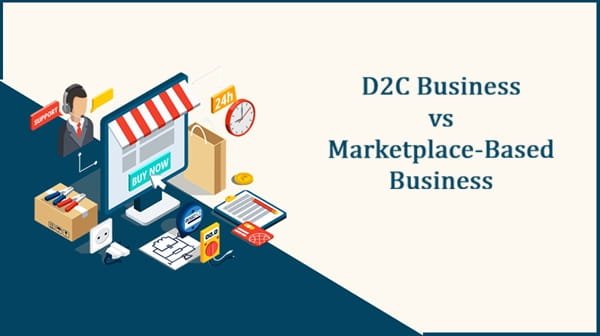
Understanding these differences can help entrepreneurs choose the right online business model based on their investment capacity, product category and long-term growth objectives.
What Is a D2C Business?
Direct-to-Consumer (D2C) is a business model in which a brand sells its products directly to customers without depending on traditional distributors, wholesalers or retailers.
D2C businesses generally use their own e-commerce websites, mobile applications, social media channels and other direct sales platforms.
For example, a skincare company can manufacture its products and sell them directly through its website rather than depending entirely on retail stores or third-party marketplaces.
Common examples of D2C business categories include:
- Clothing and fashion brands
- Skincare and beauty products
- Personal care products
- Packaged food and beverages
- Home décor and lifestyle products
- Fitness and wellness accessories
The main objective of a D2C business is to maintain direct relationships with customers, control the brand experience and manage the sales journey.
What Is a Marketplace-Based Business?
A marketplace-based business sells products through an established third-party e-commerce platform. Instead of developing an independent online shopping platform, sellers use an existing marketplace to list products and receive orders.
Examples of online marketplaces in India include:
- Amazon India
- Flipkart
- Meesho
- Myntra
- Ajio
- IndiaMART
Sellers create accounts, upload product listings, manage inventory and fulfil customer orders according to marketplace policies.
For example, a clothing manufacturer can register as a seller on Flipkart and list its products for customers across India.
Marketplaces provide access to an existing customer base, payment infrastructure and, depending on the platform, logistics support.
D2C Business vs Marketplace-Based Business: Key Differences
| Basis | D2C Business | Marketplace-Based Business |
| Sales channel | Own website or direct channels | Third-party marketplace |
| Brand control | Greater control | Subject to marketplace policies |
| Customer relationship | Direct relationship | Primarily managed through the platform |
| Customer data | Greater control, subject to privacy laws | Access restricted by platform policies |
| Initial setup | Requires website or sales infrastructure | Seller account and product listings |
| Marketing | Business manages customer acquisition | Marketplace advertising and promotions |
| Selling fees | Website, payment and marketing costs | Commission and other platform charges |
| Competition | Competes across direct sales channels | Competes with other marketplace sellers |
| Customer experience | Highly customisable | Follows marketplace structure |
| Brand building | Stronger direct brand ownership | Depends partly on marketplace visibility |
Customer Relationships and Brand Ownership
One of the biggest advantages of the D2C model is direct customer interaction.
Businesses can communicate with customers through their websites, email newsletters, social media accounts and loyalty programmes. This helps brands understand customer preferences and encourage repeat purchases.
For example, a clothing brand can analyse customer feedback and purchasing behaviour to introduce new collections that match customer interests.
Marketplace-based businesses have less control over customer relationships because the shopping experience is managed largely through the marketplace. Sellers may have limited access to customer information and must follow platform rules regarding communication and promotions.
Therefore, D2C businesses generally have greater opportunities to develop independent customer relationships.
Investment and Operating Costs
D2C businesses require investment in website development, hosting, payment gateway integration, product photography, digital marketing and customer support.
They may also need to arrange packaging, warehousing, delivery and return management independently.
Marketplace-based businesses can start with comparatively less technical infrastructure because the platform already provides product listing, shopping and payment facilities.
However, marketplaces charge sellers different fees, including referral commissions, shipping charges, fulfilment fees and other applicable service charges.
Which is better? Marketplace selling may be easier for entrepreneurs with limited technical knowledge, while D2C can be attractive for businesses that want greater control over their sales infrastructure.
Marketing and Customer Acquisition
Marketing is essential for both business models, but the strategies differ.
D2C brands generally depend on digital marketing channels such as:
- Search engine optimisation (SEO)
- Social media advertising
- Influencer marketing
- Email marketing
- Content marketing
- Paid search campaigns
These activities help businesses attract visitors to their own websites and build brand awareness.
Marketplace-based sellers can use sponsored advertisements, product promotions, discounts and marketplace search optimisation to improve product visibility.
However, marketplace competition can be intense. Sellers may need to invest in advertising to make their products stand out among similar listings.
D2C businesses must build their own traffic, while marketplace sellers compete for visibility within an established shopping environment.
Profit Margins and Revenue Potential
D2C businesses may have better control over pricing because they do not necessarily have to pay marketplace commissions. They can also introduce bundles, subscriptions and exclusive products to improve customer retention.
However, customer acquisition, website maintenance, payment processing, shipping and returns can be expensive.
Marketplace-based businesses may face commissions and other platform charges, which can reduce the amount received from each sale. On the other hand, access to existing shoppers may help them generate orders without independently building a large customer base.
Actual profitability depends on product costs, advertising expenses, delivery charges, return rates and repeat purchases.
Logistics and Order Management
D2C businesses generally need to develop their own fulfilment arrangements. They may partner with courier companies, third-party logistics providers and warehouse operators.
This provides flexibility but also creates responsibility for delivery performance, inventory management, packaging and customer complaints.
Marketplace-based businesses may use platform-supported fulfilment services. Depending on the arrangement, the marketplace may provide storage, packaging, shipping and return management.
However, sellers must follow the platform’s fulfilment standards and service-level requirements.
Which Business Model Is Better for Indian Entrepreneurs?
A D2C business may be suitable if you:
- Want to build your own consumer brand.
- Prefer direct customer relationships.
- Sell differentiated or private-label products.
- Have a budget for digital marketing.
- Want greater control over pricing and customer experience.
A marketplace-based business may be suitable if you:
- Are starting an online selling business.
- Want access to existing online shoppers.
- Have limited website development experience.
- Sell products with established market demand.
- Prefer using marketplace payment and logistics facilities.
For example, a new manufacturer selling household products may begin with Amazon or Flipkart to test market demand. After building brand recognition, the business may launch its own website and develop a D2C sales channel.
Can a Business Use Both D2C and Marketplace Models?
Yes. Many businesses combine both models to increase sales opportunities and reduce dependence on a single platform.
A company can sell products through its own website while maintaining seller accounts on Amazon, Flipkart and other marketplaces.
This approach provides access to marketplace customers while allowing the business to develop its own brand and direct sales channel.
However, businesses should manage inventory, pricing, accounting, advertising and customer support carefully across all channels.
Conclusion
D2C and marketplace-based businesses offer different opportunities for online sellers in India. A D2C model provides greater control over branding, customer relationships, pricing and the shopping experience. However, it requires investment in website infrastructure, marketing and independent fulfilment.
A marketplace-based business provides access to existing customers, integrated selling facilities and convenient fulfilment options. However, sellers must follow platform policies and account for commissions and other charges.
For beginners, marketplaces can provide an easier entry into online selling. Businesses focused on building long-term brand value may benefit from developing a D2C channel.
Ultimately, the best strategy depends on product differentiation, investment capacity, customer acquisition costs and business objectives. Many growing brands can benefit from combining both models.
Frequently Asked Questions (FAQs)
Q. What is the main difference between D2C and marketplace-based businesses?
A D2C business sells directly to customers through its own sales channels, while a marketplace-based business sells products through third-party platforms such as Amazon and Flipkart.
Q. Is D2C more profitable than marketplace selling?
Not necessarily. D2C businesses may avoid marketplace commissions but face higher customer acquisition and infrastructure costs. Marketplace sellers pay platform fees but can benefit from existing customer traffic.
Q. Can small businesses start a D2C brand in India?
Yes. Small businesses can launch D2C brands using e-commerce websites, social media and digital marketing, subject to applicable business and regulatory requirements.
Q. Do D2C businesses need GST registration?
GST registration depends on applicable turnover thresholds, the nature of supplies and other legal conditions. Selling through an own website does not automatically make GST registration compulsory in every case.
Q. Can a D2C brand sell on Amazon and Flipkart?
Yes. A D2C brand can sell through its own website and third-party marketplaces simultaneously, provided it follows the applicable platform policies and legal requirements.
Q. Which model is better for first-time entrepreneurs?
Marketplace-based selling may be easier for beginners because it provides an established shopping platform. D2C may be more suitable for entrepreneurs who want to build an independent brand and have the resources to manage marketing and fulfilment.