Starting a small manufacturing unit from home may look economical. It avoids industrial rent and allows an entrepreneur to begin with limited capital. But manufacturing is different from ordinary home-based office work. Machines, electrical load, raw materials, workers, noise, dust, fumes, deliveries and waste can change the legal use and safety profile of a property.
A manufacturing business is not automatically legal merely because the entrepreneur owns the residential property. Whether production can take place there depends mainly on local land-use and building rules, the nature and scale of manufacturing, pollution classification, fire and safety requirements and the number of workers. Some cities permit specified non-polluting household industries in residential premises subject to limits. Larger, hazardous, noisy or polluting manufacturing normally belongs in an industrial or otherwise permitted zone.
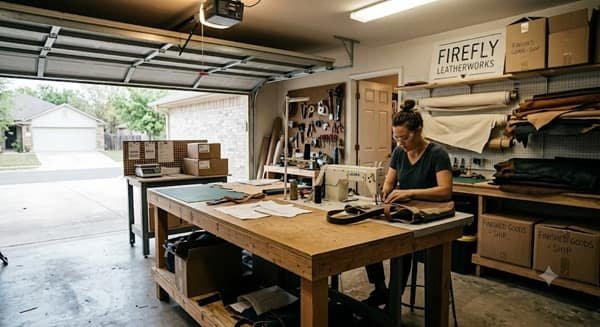
Land Use Is the First Check
The most important question is whether the local development plan or municipal rules allow the proposed manufacturing activity at that address.
Residential property is approved primarily for residential use. Some planning authorities permit limited mixed use, professional activity or household industry, but usually impose conditions relating to floor area, number of workers, power load, nuisance and the type of goods produced.
Delhi, for example, has long distinguished permissible non-polluting household industry from general manufacturing in residential areas. The exact rules differ across India, so an entrepreneur should check the local master plan, development authority and municipal rules rather than relying on another city’s limits.
Household Industry Is Not the Same as a Factory
A small household industry may involve light, low-risk production carried on by a family or a few workers with limited machinery. A factory or larger manufacturing unit may involve substantially more employees, power-driven machinery and safety obligations.
India’s Occupational Safety, Health and Working Conditions Code, 2020 has been in force from 21 November 2025. Under the new framework, the factory threshold is generally 20 workers where a manufacturing process is carried on with power and 40 workers where it is carried on without power. Other safety and welfare provisions can apply to establishments with 10 or more employees.
Crossing a labour-law threshold does not decide land use. A unit can be too intensive for a residential area even if it employs fewer workers than the factory threshold.
Pollution Control Classification Also Matters
Manufacturing activities are classified according to their pollution potential. The Central Pollution Control Board uses categories such as Red, Orange, Green, White and Blue for different industrial sectors and activities.
A dry, non-polluting assembly process may face much lighter environmental compliance than a unit involving chemical treatment, paint spraying, furnaces, boilers, wastewater or significant dust.
White-category treatment also does not mean that any residential address becomes legal for manufacturing. Pollution classification and land-use permission are separate issues.
Fire, Electrical Load and Storage
Residential wiring and buildings may not be designed for industrial machinery. Before installing equipment, the operator should consider sanctioned electrical load, earthing, ventilation, machine guards and emergency access.
Businesses storing flammable chemicals, LPG cylinders beyond ordinary domestic use, solvents, timber, large quantities of packaging or other combustible material may trigger stricter fire or storage rules. A fire NOC is not automatically required for every tiny unit, but it may become compulsory depending on the building, occupancy, area and local fire law.
Municipal and Business Registrations
Depending on the location and type of unit, the entrepreneur may have to obtain:
- Municipal trade or factory permission.
- Registration or licence required under local industrial rules.
- Pollution-control consent or intimation where applicable.
- Labour registration and workplace compliance.
- GST registration when legally required.
- Product-specific approvals for regulated goods.
Udyam registration is useful for eligible MSMEs and provides formal MSME recognition, but it is not a land-use licence. An Udyam certificate cannot legalise manufacturing in premises where the activity itself is prohibited.
Can Neighbours Object to a Home Manufacturing Unit?
Yes. Even a technically permitted activity can create problems if it causes excessive noise, smoke, vibration, smell, traffic congestion, blocked common areas or unsafe storage.
Apartment associations and housing societies may also have rules governing commercial activity. A landlord’s lease may prohibit manufacturing even where municipal rules allow some mixed use.
The best home-based unit is one whose scale genuinely remains compatible with residential surroundings.
What Happens if Manufacturing Is Carried On Illegally From a House?
Municipal or development authorities may issue notices, seal or stop the activity, impose penalties or require the unit to shift. Pollution authorities can take separate action where environmental requirements are violated.
Insurance claims may also become difficult if an accident occurs while the premises is being used for an unauthorised industrial purpose. Labour, fire or electricity authorities can have their own enforcement powers.
How to Start Home-Based Manufacturing Legally
- Identify the exact manufacturing process, machines, power load and raw materials.
- Check whether the activity is permitted as household industry or mixed use at the property.
- Confirm building, landlord or society restrictions.
- Check the CPCB/SPCB pollution category and consent or intimation requirement.
- Review fire safety, electrical load and storage arrangements.
- Check labour-code requirements based on the number of employees and manufacturing process.
- Obtain local trade, factory or municipal permissions where applicable.
- Shift to industrial premises if the scale or process is not compatible with residential use.
Conclusion
A manufacturing business can operate from residential property in some circumstances, but there is no nationwide right to manufacture from home. Small non-polluting household industries may be permitted under local rules, while larger or nuisance-causing units generally require suitable commercial or industrial premises. Land use should be checked first, followed by pollution, labour, fire and local business requirements. Owning the house or holding an MSME certificate does not by itself make residential manufacturing legal.
Frequently Asked Questions
Q. Does Udyam registration allow manufacturing from a residential house?
No. Udyam registration identifies an eligible MSME; it does not override municipal land-use or building rules.
Q. Can one machine be used at home for manufacturing?
Possibly, if the activity is permitted locally and does not violate limits on power, nuisance, safety or household-industry use.
Q. Is pollution-control permission needed for every home manufacturing unit?
Not necessarily. The requirement depends on the industrial category and current central and state pollution-control rules.
Q. Does having fewer than 20 workers automatically make a residential factory legal?
No. Worker thresholds under labour law and permission to use residential property for manufacturing are separate questions.