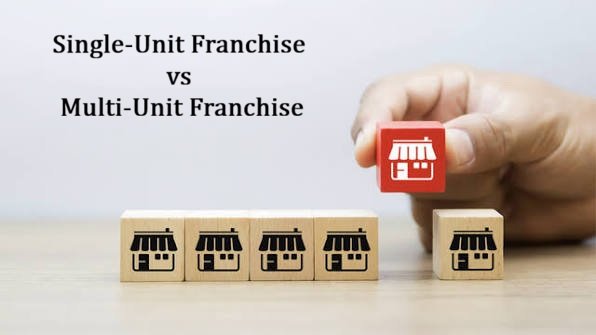
Starting a franchise business can be an attractive opportunity for entrepreneurs who want to operate under an established brand. However, choosing the right franchise structure is just as important as selecting the brand itself. Two common options are single-unit franchising and multi-unit franchising. Both allow entrepreneurs to operate businesses using an established brand, but they differ in investment requirements, management responsibilities, growth potential and financial risks.
A single-unit franchise allows an entrepreneur to operate one outlet at an approved location, while a multi-unit franchise gives the franchisee the right to operate multiple outlets under the same brand. For first-time entrepreneurs in India, a single-unit franchise may provide an easier entry into franchising. Experienced business owners with sufficient capital and management resources may find multi-unit franchising more attractive.
Understanding their differences can help entrepreneurs choose a structure that matches their financial capacity, business experience and expansion goals.
What Is a Single-Unit Franchise?
A single-unit franchise is a business arrangement in which a franchisor grants an individual or business the right to operate one franchise outlet at a specific approved location.
The franchisee uses the franchisor’s brand name, products, services and operating procedures while managing the day-to-day activities of that outlet.
Examples include:
- A single branded fast-food restaurant
- One fitness centre
- A branded clothing store
- A single preschool or coaching centre
- One beauty salon
- A branded courier service outlet
The franchisee generally pays an initial franchise fee and other applicable charges. Depending on the agreement, recurring royalty payments and marketing contributions may also be required.
This model is suitable for entrepreneurs who want to enter the franchise industry without managing several locations simultaneously.
What Is a Multi-Unit Franchise?
A multi-unit franchise allows a franchisee to operate two or more outlets under the same brand. Instead of managing only one location, the franchisee agrees to establish and operate multiple units within an approved territory or according to an agreed development schedule.
For example, an entrepreneur may obtain the rights to operate five branded cafés across different locations in a city.
Multi-unit franchise agreements may include development targets, opening deadlines, territory restrictions and investment commitments.
This model is commonly preferred by experienced entrepreneurs, investors and business operators who have the financial resources and management capabilities to supervise multiple locations.
Single-Unit Franchise vs Multi-Unit Franchise: Key Differences
| Basis | Single-Unit Franchise | Multi-Unit Franchise |
| Number of outlets | One | Two or more |
| Initial investment | Generally lower | Generally higher |
| Management | Comparatively simple | More complex |
| Operational responsibility | One location | Multiple locations |
| Growth potential | Limited to one outlet initially | Greater expansion opportunities |
| Financial risk | Concentrated in one outlet | Spread across multiple outlets, but with greater total exposure |
| Staffing | Smaller workforce | Larger workforce |
| Monitoring | Easier | Requires management systems |
| Suitable for | Beginners and small investors | Experienced entrepreneurs and larger investors |
The actual investment and responsibilities depend on the franchise brand, agreement and business category.
Initial Investment and Financial Requirements
Investment is one of the biggest differences between single-unit and multi-unit franchising.
A single-unit franchise generally requires capital for one location, including franchise fees, rent, interiors, equipment, inventory, staff salaries and working capital.
For example, opening one branded food outlet may require investment in kitchen equipment, furniture, signage, licences and initial inventory.
A multi-unit franchise requires considerably more financial planning. The entrepreneur must arrange funds for multiple locations, additional employees, equipment, inventory and ongoing operating expenses.
Some franchisors may offer development agreements that allow franchisees to open outlets in phases. However, franchisees must understand the financial commitments and opening deadlines before signing such agreements.
Which is better? A single-unit franchise is generally more accessible to entrepreneurs with limited capital. Multi-unit franchising is more suitable for those with sufficient funding and the ability to manage larger operations.
Profit Potential and Revenue Opportunities
A single-unit franchise generates revenue from one outlet. Its profitability depends on location, customer demand, pricing, operating expenses and brand performance.
The advantage is that the entrepreneur can focus on improving one outlet’s customer experience, service quality and financial performance.
A multi-unit franchise offers the opportunity to generate revenue from several outlets. If each location performs well, the franchisee may achieve higher overall revenue and potentially benefit from shared resources.
For example, a franchisee operating three successful cafés may be able to manage purchasing, marketing and administrative functions more efficiently than someone operating three completely separate businesses.
However, higher revenue does not automatically mean higher profits. Multiple outlets also create additional rent, salaries, maintenance, royalty and management expenses.
Management and Operational Responsibilities
Managing one franchise outlet is generally easier than supervising several locations.
A single-unit franchisee can directly monitor employees, inventory, customer feedback, service standards and daily sales. This makes it easier to identify operational problems and take corrective action.
In a multi-unit franchise, the owner must coordinate different teams and locations. This may require appointing store managers, area supervisors and administrative staff.
The entrepreneur must also establish systems for financial reporting, inventory management, staff performance and quality control.
Therefore, multi-unit franchising requires stronger leadership, delegation and business management skills.
Risk and Business Stability
A single-unit franchise involves lower total investment in many cases, but the business depends heavily on the performance of one location.
If that outlet experiences weak demand, high rent or intense competition, the franchisee may face significant financial difficulties.
Multi-unit franchising provides an opportunity to diversify revenue across several locations. If one outlet performs poorly, the others may continue generating income.
However, multi-unit franchisees also face greater overall financial exposure. Poor management, excessive borrowing or weak market research can create losses across multiple outlets.
The best approach is to evaluate the financial risks of each location rather than assuming that operating more outlets automatically creates greater stability.
Growth and Expansion Opportunities
Single-unit franchising can provide a foundation for future business expansion. Entrepreneurs can first understand the franchisor’s operating model, customer expectations and profitability before considering additional outlets.
Some franchisors allow successful single-unit franchisees to apply for additional locations, subject to their eligibility and available territories.
Multi-unit franchising provides a more direct expansion opportunity. Franchisees can establish several outlets according to an agreed development schedule and build a larger business presence.
However, rapid expansion without sufficient capital, experienced managers and market research can affect service quality and profitability.
Which Is Better for Entrepreneurs in India?
A single-unit franchise may be suitable if you:
- Are entering the franchise industry for the first time.
- Have limited or moderate investment capacity.
- Want to understand franchise operations before expanding.
- Prefer managing one location directly.
- Want to limit your initial financial exposure.
A multi-unit franchise may be suitable if you:
- Have previous business management experience.
- Can arrange substantial investment and working capital.
- Have access to reliable managers and employees.
- Understand the local market and customer demand.
- Want to build a larger franchise operation.
For example, a first-time entrepreneur opening one branded coaching centre may prefer a single-unit agreement. An experienced business operator with sufficient capital may consider developing several outlets across a city.
Conclusion
Both single-unit and multi-unit franchises offer business opportunities, but they suit different types of entrepreneurs. A single-unit franchise provides a relatively manageable entry into the franchise industry, allowing owners to focus on one outlet and understand the business model.
A multi-unit franchise offers greater expansion potential, the possibility of higher overall revenue and opportunities to benefit from shared resources. However, it requires more capital, stronger management systems and greater operational responsibility.
For first-time entrepreneurs, starting with a single-unit franchise is often a practical approach. Experienced business owners with sufficient financial resources may find multi-unit franchising more attractive.
Ultimately, the right choice depends on investment capacity, business experience, market demand and the ability to manage franchise operations effectively.
Frequently Asked Questions (FAQs)
Q. What is the main difference between a single-unit and multi-unit franchise?
A single-unit franchise allows an entrepreneur to operate one outlet, while a multi-unit franchise provides the right to operate multiple outlets under the same brand.
Q. Is a single-unit franchise better for beginners?
Yes. It is generally easier for beginners because it involves managing one location, fewer employees and comparatively lower initial investment.
Q. Is a multi-unit franchise more profitable?
It can generate higher total revenue because it operates multiple outlets. However, profitability depends on sales, operating expenses, investment and management efficiency.
Q. Can a single-unit franchisee open additional outlets later?
Yes, if the franchisor permits expansion and the franchisee satisfies the applicable financial, operational and contractual conditions.
Q. Does a multi-unit franchise require a separate franchise fee for every outlet?
It depends on the franchisor’s agreement. Some franchisors charge fees for each outlet, while others offer development arrangements with specific fee structures.
Q. What should I check before signing a multi-unit franchise agreement?
Review the total investment, outlet-opening schedule, territory rights, royalty payments, staffing requirements, performance targets, renewal conditions and termination clauses before making a commitment.