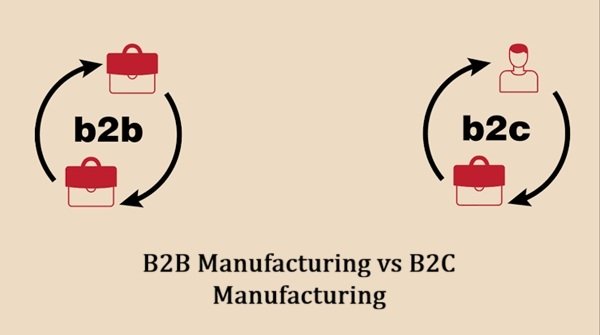
Manufacturing businesses can sell their products to different types of customers depending on their business model. Some manufacturers supply products in bulk to other companies, distributors and retailers, while others sell directly to individual consumers. These approaches are commonly known as B2B manufacturing and B2C manufacturing.
B2B stands for Business-to-Business, where a manufacturer produces goods for other businesses. B2C stands for Business-to-Consumer, where a manufacturer sells products directly to final customers. Both models offer opportunities for entrepreneurs, but they differ in customer relationships, marketing strategies, production requirements, pricing and profit potential.
For example, a company manufacturing automobile components may supply its products to vehicle manufacturers, while a business producing packaged snacks may sell directly to consumers through retail stores and online platforms. Choosing the right model depends on the product category, investment capacity, market demand and long-term business objectives.
What Is B2B Manufacturing?
B2B manufacturing refers to a business model in which a manufacturer produces and sells goods to other businesses rather than directly to individual consumers.
The buyers may include wholesalers, retailers, distributors, industrial companies, construction businesses and other manufacturers. These customers generally purchase products in bulk or according to specific commercial requirements.
Common examples of B2B manufacturing include:
- Automobile components manufacturing
- Industrial machinery production
- Steel and metal fabrication
- Packaging material manufacturing
- Electrical equipment manufacturing
- Textile and fabric production
- Chemical and industrial material manufacturing
For example, a company manufacturing electrical wires may supply them to construction companies, electrical contractors and equipment manufacturers.
B2B manufacturers generally focus on bulk orders, product specifications, long-term contracts, competitive pricing and reliable delivery.
What Is B2C Manufacturing?
B2C manufacturing refers to a business model in which manufacturers produce goods and sell them directly to individual consumers.
Instead of supplying products exclusively to other businesses, manufacturers target customers who purchase goods for personal or household use.
Common examples include:
- Clothing and footwear manufacturing
- Cosmetics and skincare products
- Packaged food and beverages
- Furniture manufacturing
- Home appliances
- Personal care products
- Kitchenware and household goods
For example, a company manufacturing skincare products may sell them directly through its website, retail outlets or online marketplaces.
B2C manufacturers focus on product quality, branding, packaging, customer experience, pricing and marketing. Their success often depends on understanding consumer preferences and building brand recognition.
B2B Manufacturing vs B2C Manufacturing: Key Differences
| Basis | B2B Manufacturing | B2C Manufacturing |
| Target customers | Other businesses | Individual consumers |
| Order quantity | Usually bulk orders | Often individual or smaller orders |
| Sales process | Negotiations and business agreements | Direct purchases and retail sales |
| Marketing | Business networking and direct sales | Advertising and brand promotion |
| Customer relationships | Often long-term contracts | Repeat purchases and brand loyalty |
| Pricing | Negotiated or volume-based | Generally market or retail-based |
| Product requirements | Often based on technical specifications | Based on consumer preferences |
| Packaging | May focus on bulk or industrial requirements | Often designed for retail presentation |
| Distribution | Distributors, dealers and direct business supply | Retail stores and online channels |
| Customer base | Comparatively smaller number of buyers | Potentially large consumer audience |
Investment and Production Requirements
Investment requirements depend on the industry, production capacity and product complexity. However, B2B and B2C manufacturers may have different operational priorities.
B2B manufacturers often need specialised machinery, industrial facilities, technical equipment and quality-control systems. They may also need to maintain sufficient production capacity to fulfil large orders from business customers.
For example, a company manufacturing metal components may require advanced cutting, welding and machining equipment.
B2C manufacturers may need additional investment in product design, packaging, branding, marketing and distribution. They must ensure that products are suitable for individual consumers and meet applicable safety and labelling requirements.
A cosmetics manufacturer, for instance, may invest in product formulation, attractive packaging and consumer-focused marketing.
Which is better? Neither model automatically requires less investment. The appropriate choice depends on the manufacturing process and the resources needed to reach the target customers.
Marketing and Customer Acquisition
B2B manufacturing generally relies on direct business relationships. Manufacturers connect with potential buyers through industry exhibitions, trade fairs, business networks, sales representatives and professional platforms.
Building trust is essential because business customers often evaluate product specifications, pricing, production capacity, quality standards and delivery reliability before placing orders.
B2C manufacturing requires a different marketing approach. Manufacturers must create awareness among individual consumers through digital advertising, social media, influencer marketing, retail promotions and brand-building activities.
A strong brand identity, attractive packaging and positive customer reviews can influence purchasing decisions.
Profit Margins and Revenue Potential
B2B manufacturing businesses may earn relatively lower margins per unit when supplying products in large quantities. However, bulk orders and long-term supply agreements can create predictable revenue opportunities.
For example, a manufacturer supplying packaging materials to several food companies may receive regular orders throughout the year.
B2C manufacturers may have greater control over retail pricing and branding. Selling directly to consumers can potentially improve margins by reducing intermediary costs.
However, B2C businesses also face expenses related to advertising, customer acquisition, retail distribution, packaging, returns and after-sales service.
Therefore, higher selling prices do not necessarily result in higher net profits. Both models require careful cost management and effective sales planning.
Customer Relationships and Sales Cycles
B2B manufacturing generally involves longer sales cycles. Business customers may request product samples, technical specifications, quotations, quality inspections and contract negotiations before confirming an order.
Once a manufacturer establishes a reliable relationship with a buyer, repeat orders can support business stability.
B2C manufacturing usually involves shorter purchasing decisions. Consumers may buy products based on price, convenience, brand reputation, reviews and personal preferences.
However, B2C manufacturers must continuously attract new customers and encourage repeat purchases through product quality and customer satisfaction.
Risks and Business Challenges
Both business models involve different risks.
B2B manufacturing businesses may face:
- Dependence on a limited number of major buyers.
- Delayed payments and credit-related problems.
- Pressure to offer competitive bulk pricing.
- High production requirements.
- Dependence on long-term supply contracts.
B2C manufacturing businesses may face:
- Strong competition from established brands.
- High advertising and promotional expenses.
- Changing consumer preferences.
- Product returns and customer complaints.
- Difficulty building brand recognition.
B2B manufacturers can reduce risks by diversifying their customer base and maintaining clear payment terms. B2C manufacturers can improve performance through market research, product innovation and effective customer service.
Which Business Model Is Better for Entrepreneurs?
B2B manufacturing may be more suitable if you:
- Want to supply products to companies and distributors.
- Have access to industrial buyers.
- Can manufacture products in bulk.
- Prefer long-term business relationships.
- Have the technical resources to meet commercial specifications.
B2C manufacturing may be better if you:
- Want to build your own consumer brand.
- Understand individual customer preferences.
- Can invest in marketing and packaging.
- Want to sell through retail stores or online platforms.
- Prefer direct interaction with consumers.
Some manufacturers also follow a hybrid model by supplying products to businesses while selling selected products directly to consumers. This approach can diversify revenue sources, although it requires separate pricing, distribution and marketing strategies.
Conclusion
B2B and B2C manufacturing offer different opportunities for businesses entering the manufacturing industry. B2B manufacturing focuses on supplying products to other companies, generally through bulk orders, negotiated pricing and long-term business relationships. B2C manufacturing focuses on individual consumers and depends heavily on branding, product presentation, marketing and customer satisfaction.
B2B manufacturing may be suitable for entrepreneurs who have access to industrial buyers and can manage large production orders. B2C manufacturing can be attractive to businesses that want to establish their own brands and reach consumers directly.
Ultimately, neither model is universally better. The right choice depends on the product, target market, investment capacity, production capabilities and long-term business goals.
Frequently Asked Questions (FAQs)
Q. What is the main difference between B2B and B2C manufacturing?
B2B manufacturing involves producing goods for other businesses, while B2C manufacturing involves producing and selling goods directly to individual consumers.
Q. Is B2B manufacturing more profitable than B2C manufacturing?
B2B manufacturing can generate stable revenue through bulk orders and long-term contracts. B2C manufacturing may offer greater control over retail pricing and branding. Actual profitability depends on production costs, sales volume and operating expenses.
Q. Which manufacturing model is better for startups?
B2B manufacturing may suit startups with specialised production capabilities and access to business customers. B2C manufacturing may be suitable for startups with a strong consumer product idea and the ability to build a brand.
Q. Can a manufacturer operate both B2B and B2C businesses?
Yes. A manufacturer can supply products to distributors and retailers while also selling directly through its website or physical stores. However, it needs effective inventory management and separate pricing strategies.
Q. What are some examples of B2B manufacturing businesses in India?
Examples include automobile component manufacturing, industrial machinery production, packaging materials, electrical equipment, metal fabrication and textile supply.
Q. What are some examples of B2C manufacturing businesses?
Examples include clothing brands, cosmetics manufacturers, packaged food companies, furniture businesses, footwear manufacturers and household product brands.