Furniture manufacturing ranges from a carpenter making custom tables in a small workshop to a factory producing modular kitchens, office furniture, steel furniture or large quantities of wooden products. The business is legal in India, but the required approvals depend heavily on the material, machinery and production process.
A workshop that cuts and assembles purchased timber or boards without spray painting may fall within a low-pollution category, while a unit using spray paint, boilers, extensive adhesives or timber-sawing processes can face different environmental controls. Location is equally important. A furniture workshop creates noise, sawdust, vehicle movement and fire load, so it cannot simply be placed in any residential building because the proprietor owns the property.
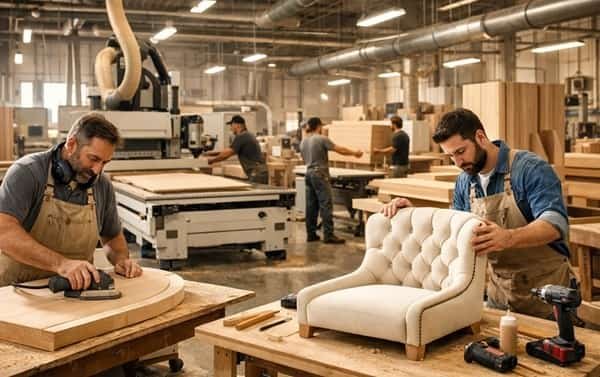
Choose Premises Where Manufacturing Is Permitted
Furniture production should normally be carried on from premises where the relevant industrial or workshop activity is allowed. Some planning authorities permit limited non-polluting household industries in residential areas, but ordinary manufacturing and timber-related activities may be restricted.
Before taking a workshop, the entrepreneur should check local zoning, municipal licensing, road access, electricity load and storage arrangements. A commercial showroom permission is not necessarily the same as permission to operate cutting, sanding and manufacturing machinery at the site.
Pollution Category Depends on the Process
Current CPCB classification makes an important distinction within furniture manufacturing.
Carpentry and wooden furniture manufacturing without spray painting, excluding saw mills and using common motorised woodworking equipment, appears in the White-category schedule. Furniture manufacturing with spray painting has a higher pollution profile, and other processes involving boilers, resins or additional operations can move into another category.
The business should describe its actual machinery and finishing process to the State Pollution Control Board rather than selecting a category only from the finished product name.
Timber and Wood Sourcing
A furniture manufacturer should maintain proper purchase records for timber, plywood, MDF, particle board and other wood products. Legality of the finished furniture does not excuse illegal sourcing of forest produce.
Where the unit itself operates a saw mill, processes logs or transports timber species covered by forest or transit rules, additional permissions may apply under state forest laws. These requirements are different from ordinary carpentry using lawfully purchased sawn timber or manufactured boards.
The entrepreneur should therefore distinguish a furniture workshop from a saw mill.
Fire and Dust Safety
Wood dust and large stocks of timber, foam, varnish and packaging material increase fire risk. Even a small workshop should maintain good housekeeping and keep dust from accumulating around motors and electrical panels.
Useful safety measures include:
- Suitable fire extinguishers for the materials used.
- Clear exits and access paths.
- Proper earthing and protected electrical wiring.
- Dust collection or ventilation around cutting and sanding equipment.
- Safe storage of paint, thinner and adhesives.
- Guards on saws, cutters and other moving machinery.
- Personal protective equipment for workers exposed to dust or noise.
A formal fire NOC depends on local building and fire rules; it should not be claimed as compulsory for every small workshop.
Labour and Factory Compliance
The Occupational Safety, Health and Working Conditions Code has been effective from 21 November 2025. A manufacturing premises is generally treated as a factory at 20 or more workers where power is used or 40 or more workers where power is not used.
Other safety and welfare requirements can apply to establishments with 10 or more employees. A workshop below the factory threshold is still expected to provide a reasonably safe workplace and comply with other applicable labour provisions.
Udyam and GST Registration
An eligible furniture manufacturer can obtain Udyam registration for MSME recognition. This may help with credit, procurement opportunities and schemes, but it is not a licence to manufacture at a prohibited location.
GST registration depends on turnover and other statutory conditions. Furniture manufacturers selling through multiple channels or across states should review GST registration, invoicing and e-way bill requirements applicable to their actual transactions.
Can Furniture Be Manufactured From Home?
Very small handcraft or low-impact work may be permitted in some areas, but motorised carpentry can create noise, sawdust and safety issues. Local land-use rules should be checked before installing saws, planers or sanding machines at a residence.
Apartment buildings are particularly unsuitable for many woodworking operations because of shared access, noise, dust and fire risk. Even where home enterprise is allowed, the business may face limits on workers, power and floor area.
What Happens if the Workshop Operates Without Required Permission?
A local authority may stop or seal a workshop operating from premises where manufacturing is not permitted. Pollution authorities can also act if the unit undertakes a process for which required environmental compliance has not been completed.
Illegal timber sourcing, unsafe machinery, fire violations and labour non-compliance can create separate consequences. One registration does not protect the business from violations under another law.
How to Start a Furniture Manufacturing Business Legally
- Decide whether the business will make wooden, modular, metal or mixed-material furniture.
- List the machinery, painting, polishing and finishing processes to be used.
- Choose premises where that manufacturing activity is permitted.
- Check CPCB/SPCB pollution classification and complete required intimation or consent.
- Verify timber sourcing and any forest or transit requirements relevant to the raw material.
- Obtain applicable municipal, factory or local trade permission.
- Put fire, dust, electrical and machine-safety measures in place.
- Check Udyam, GST and labour-code requirements as the business grows.
Conclusion
Furniture manufacturing is legal in India, but the compliance burden depends on how the furniture is made. Basic carpentry without spray painting can fall within the White-category environmental framework, while painting, boilers, saw-mill activity or more complex processes may face additional regulation. A lawful workshop also needs suitable premises, safe machinery, legitimate raw materials and applicable labour and tax compliance. The business should be regulated according to its real process, not merely the word “furniture.”
Frequently Asked Questions
Q. Does every furniture workshop need pollution consent?
Not in the same form. Current rules distinguish low-pollution White-category activities from processes with higher pollution potential. The State Pollution Control Board should be checked for the applicable procedure.
Q. Is a saw mill licence the same as a furniture-manufacturing permission?
No. Saw-mill and forest-related regulation can be separate from ordinary furniture manufacturing using lawfully purchased material.
Q. Can a furniture workshop operate in a residential area?
Only where local land-use rules permit the scale and type of activity. Noise, dust, power use and storage make many residential premises unsuitable.
Q. Is spray painting treated differently from ordinary carpentry?
Yes. Spray painting changes the environmental and fire-safety profile of the unit and can affect its pollution category and compliance requirements.