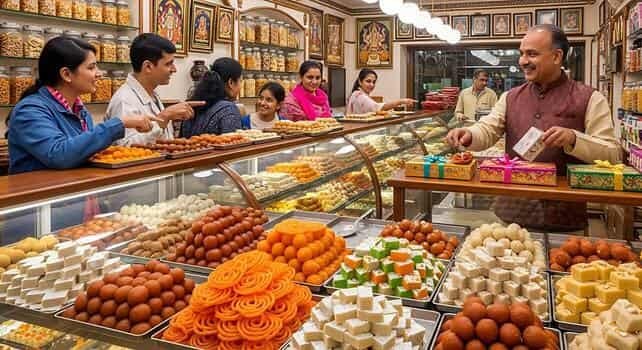
A sweet shop does much more than sell a finished product. Many outlets prepare milk sweets, fried sweets, savouries and snacks in their own kitchen, store ingredients for long periods and display food for several hours before sale. Because these activities directly affect food safety, a mithai shop is treated as a food business under Indian law.
A sweet shop should not operate without the appropriate FSSAI registration or licence. The requirement applies whether the shop sells only a limited range of sweets or runs a larger manufacturing kitchen. The correct category depends on turnover and on whether the outlet simply retails products made elsewhere or manufactures and processes food itself.
The law therefore does not treat FSSAI as an optional quality badge. It is part of the legal framework for running the food business. Local trade, premises and employment-related requirements may apply in addition to FSSAI compliance.
FSSAI Registration or Licence for a Sweet Shop
FSSAI revised the turnover thresholds for food businesses from 1 April 2026. The broad categories are:
- Turnover up to ₹1.5 crore: FSSAI Registration.
- Turnover above ₹1.5 crore and up to ₹50 crore: State FSSAI Licence.
- Turnover above ₹50 crore: Central FSSAI Licence.
These thresholds replaced the previous turnover limits. Under the 2026 reforms, FSSAI registrations and licences also have perpetual validity unless they are suspended, cancelled or surrendered. This removes routine renewal but does not reduce the shop’s responsibility to maintain food safety.
A shop that buys finished sweets from a licensed manufacturer and sells them to consumers may fall under retail activity. A shop that actually prepares ladoo, rasgulla, barfi, jalebi, namkeen or other products is also carrying out food manufacturing or processing and should apply under the business category that matches its operations.
Loose Sweets Need Proper Shelf-Life Control
Loose sweets are common in India, but they still require proper shelf-life management. FSSAI has directed sweet sellers to display the date of manufacturing and the ‘best before’ date for non-packaged or loose sweets kept in trays or containers for sale.
This is particularly important for milk-based sweets because products containing khoa, chhena, cream or similar ingredients may have a short shelf life. A shop should not continue selling an item merely because it still looks acceptable. Storage temperature, ingredients and local conditions affect how quickly a sweet can become unsafe.
Hygiene Rules a Sweet Shop Should Follow
A sweet shop must control contamination from preparation to sale. Practical food-safety measures include:
- Use potable water and food-grade ingredients.
- Keep preparation tables, utensils, trays and machines clean.
- Protect sweets from flies, dust and repeated hand contact.
- Store milk-based and other temperature-sensitive sweets under suitable refrigeration.
- Keep raw materials separate from finished food where necessary.
- Use food-grade packaging and avoid newspaper for direct food wrapping.
- Maintain clean drains and remove waste regularly.
- Prevent pest infestation and keep food handlers personally clean.
A shop that uses frying oil repeatedly should also control oil quality instead of continuing to use visibly degraded or rancid oil.
Other Registrations and Local Permissions
FSSAI compliance does not automatically replace every local requirement. Depending on the state and city, a sweet shop may also need:
- A municipal trade licence or similar local permission.
- Shop and Establishment registration where applicable.
- GST registration if the applicable turnover or compulsory-registration conditions are met.
- Fire-safety compliance where the size, building use, cooking arrangements or local rules make it applicable.
A small outlet should not be told that every one of these permissions is compulsory nationwide. The correct approach is to check the local rules for the actual premises and activity.
Can a Home-Based Sweet Business Operate Without FSSAI?
Operating from home does not automatically remove FSSAI requirements. If sweets are prepared for commercial sale, the activity is a food business. The owner should obtain the appropriate FSSAI registration or licence and also check whether commercial food preparation is allowed at the premises under local or housing rules.
Online orders through social media or messaging apps do not change the basic food-safety obligation.
What Happens If a Sweet Shop Has No FSSAI Registration?
Food-safety authorities can take action against a business operating without the registration or licence required for its category. Action can become more serious if the shop is found selling stale, adulterated, unsafe or misbranded sweets.
The authorities may inspect the premises, take food samples, issue notices, seize unsafe stock or initiate penalty and prosecution proceedings where the law permits. Local authorities may separately act for violations involving trade licensing, sanitation or unauthorised use of premises.
How to Open a Sweet Shop Legally
- Choose suitable commercial premises and confirm local permission for the activity.
- Decide whether the shop will manufacture sweets or only retail products supplied by others.
- Apply for the appropriate FSSAI registration or licence through FoSCoS.
- Complete applicable municipal and state registrations.
- Create hygienic preparation, storage and display areas.
- Set shelf-life rules and display the required date information for loose sweets.
- Purchase milk, khoa, oil, colours and other ingredients from reliable sources.
- Train staff in hygiene and maintain cleaning, pest-control and waste-disposal routines.
Conclusion
A sweet shop is legal in India, but it should not run without the FSSAI registration or licence applicable to the business. The requirement covers both small retailers and larger sweet manufacturers, although the category differs according to turnover and activity. Proper shelf-life display, clean preparation, safe ingredients and suitable storage are just as important as holding the certificate itself.
Frequently Asked Questions
Q. Does a small mithai shop need FSSAI registration?
Yes. A small sweet shop that falls within the registration category should obtain FSSAI Registration rather than operate without food registration.
Q. Is FSSAI required if the shop only sells sweets made by another company?
Yes, retail sale of food is still a food business. The shop should obtain the FSSAI approval applicable to its retail activity, while the manufacturer should have its own appropriate approval.
Q. Do loose sweets need a best-before date?
FSSAI directions require date information for loose sweets displayed in trays or containers, including the manufacturing date and best-before date.
Q. Can a sweet shop sell snacks and namkeen under the same FSSAI approval?
Usually the business can include the food activities and product categories it actually handles, but the FoSCoS application should correctly reflect the nature of the business and products. A major change in activity may require modification of the registration or licence details.