Goats have been part of India’s rural economy for centuries. In many villages, goats were traditionally considered “moving savings” because families could raise them with relatively low investment and sell them during financial emergencies, festivals, or seasonal demand periods.
Today, goat farming is no longer viewed only as a small village-side activity.
Rising meat consumption, increasing demand for goat milk products, religious and festival-based livestock demand, and growing interest in organic livestock farming have transformed goat farming into one of India’s strongest livestock business opportunities.
At the same time, goat meat — commonly known as mutton in many Indian markets — remains one of the most expensive and consistently demanded meat categories across the country.
This has transformed goat farming into a serious commercial agriculture and livestock business.
Unlike many farming businesses affected heavily by crop failures and weather dependency, goat farming benefits from diversified income opportunities including meat, breeding, milk, manure, and livestock trading.
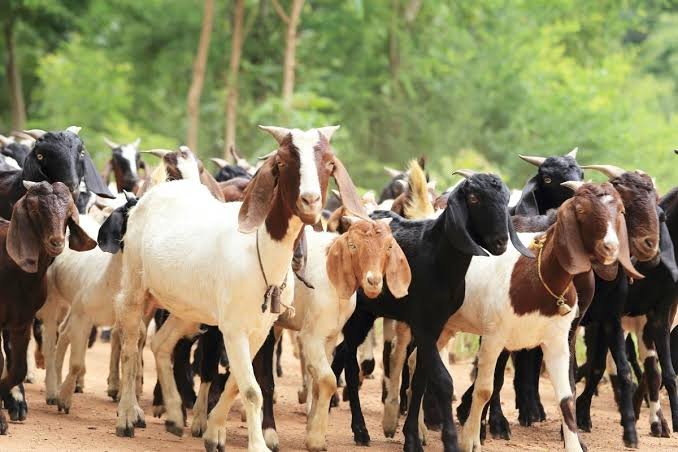
A Business Connected to Food Demand and Rural Economy
India’s livestock and meat market continues expanding steadily every year.
Several factors continue driving goat-farming demand:
- Strong mutton consumption
- Festival and religious livestock demand
- Growth of rural entrepreneurship
- Rising protein consumption
- Demand for organic and natural farming
- Increasing goat-milk awareness
Goat meat remains highly preferred across many Indian communities and regions.
Types of Goat Farming Businesses
1. Meat Goat Farming
Raising goats mainly for meat production.
2. Breeding Farm Business
Selling high-quality breeding goats and kids.
3. Dairy Goat Farming
Producing goat milk and milk-based products.
4. Organic and Free-Range Goat Farming
Premium natural livestock farming model.
5. Integrated Goat Farming
Combining goat farming with agriculture and manure production.
6. Commercial Large-Scale Goat Farm
High-volume organized livestock production.
Investment Required: Low to Moderate
Goat farming is flexible depending on scale and breed quality.
A small goat farm may require ₹2–10 lakh including:
- Goat shed construction
- Initial livestock purchase
- Feed and fodder
- Vaccination and veterinary care
- Water and fencing systems
A large commercial goat farm may require ₹25 lakh–₹5 crore or more depending on land size, breed quality, and automation.
Proper breed selection strongly affects profitability.
Revenue and Profit Potential
Goat farming can become highly profitable because demand for goat meat and breeding livestock remains consistently strong.
Revenue sources may include:
- Goat meat sales
- Breeding and kid sales
- Goat milk production
- Organic manure sales
- Festival livestock demand
- Livestock trading
For example:
- Eid and festival seasons often increase goat prices significantly.
- Premium breeds command very high breeding value.
- Goat manure creates additional agricultural income.
A well-managed goat farm can generate strong seasonal and recurring revenue. Net profit margins generally range between 20–45% depending on feed costs, breed management, and mortality control.
Farmers with good breeding quality and proper disease management often perform especially well.
What Makes This Business Successful
1. Healthy Breed Selection
Strong breeds improve growth and survival rates.
2. Proper Veterinary Care
Disease prevention is extremely important.
3. Good Feeding Management
Nutrition directly affects weight gain and profitability.
4. Clean and Ventilated Housing
Healthy environments reduce mortality risk.
5. Strong Livestock Market Connections
Good buyer networks improve selling opportunities.
Challenges to Prepare For
1. Disease and Mortality Risk
Poor health management can create major losses.
2. Feed-Cost Fluctuation
Fodder and feed prices can vary heavily.
3. Seasonal Weather Problems
Extreme heat and rain can affect livestock health.
4. Theft and Security Issues
Livestock protection becomes important in rural areas.
5. Market Price Variation
Livestock prices fluctuate depending on demand periods.
Goat farms that maintain strong hygiene and veterinary discipline usually survive long term much more successfully.
How to Increase Profitability
1. Focus on Premium Breeds
Healthy fast-growing breeds improve selling prices significantly.
2. Use Semi-Intensive Farming Model
Balanced grazing and feeding improve efficiency.
3. Build Direct Buyer Networks
Direct sales improve margins by reducing middlemen.
4. Add Breeding and Kid Sales
Breeding businesses often generate premium income.
5. Combine With Organic Farming
Goat manure creates additional agricultural value.
Goat Farming vs Poultry Farming
Poultry farming usually offers faster production cycles and higher volume. Goat farming generally requires more time but often benefits from higher individual animal value and lower industrial competition.
Goat farming also fits well with smaller rural and semi-rural setups.
However, disease control and breeding management become extremely important.
The Future of Goat Farming Business in India
The future remains very strong. India’s meat consumption, livestock economy, and rural entrepreneurship continue expanding steadily.
At the same time, premium meat demand, organic livestock farming, and natural dairy-product awareness are likely to create new opportunities in coming years.
Government support for animal husbandry and rural self-employment may also continue supporting the sector.
The Verdict
Goat farming is no longer limited to traditional village livestock rearing. It has evolved into a scalable agriculture-and-livestock business connected closely to meat demand, rural economy, festival markets, and livestock entrepreneurship.
Farmers and entrepreneurs who maintain proper breed quality, veterinary care, feeding systems, and livestock management often build highly profitable businesses with stable long-term demand.
In a country where goat meat remains one of the most preferred protein sources while rural livestock demand continues growing steadily, goat farming is likely to remain one of India’s strongest agricultural business opportunities.
Frequently Asked Questions (FAQs)
Q1. Which goat-farming segment is usually most profitable?
Meat production and premium breeding farms often provide the strongest margins.
Q2. Why is goat meat demand so strong in India?
Because goat meat is widely preferred across many regions, religions, and cultural food traditions.
Q3. Is veterinary care important in goat farming?
Extremely important. Disease prevention and proper healthcare directly affect survival and profitability.
Q4. What is the biggest challenge in goat farming?
Managing disease outbreaks and maintaining proper feeding systems are major challenges.
Q5. Can small goat farms compete against large commercial farms?
Absolutely. Many small farmers succeed through good breed quality and local livestock-market connections.
Q6. Is goat farming suitable only for rural areas?
Mostly rural and semi-rural areas perform better because grazing land and feed availability are usually more practical there.